The kid playing harmonica on the bridge.
Collecting tips in his shoe.
He’s got about
three five dollar bills.
A man about five paces
west.
Rough
all over his jaw
so bad you can see the clock on his face
about to strike midnight.
The kid playing harmonica on the bridge.
Collecting tips in his shoe.
He’s got about
three five dollar bills.
A man about five paces
west.
Rough
all over his jaw
so bad you can see the clock on his face
about to strike midnight.
No man is a forest unto himself
when every mile marker a gravestone
is bolted to the ground.
Even our childhoods are pocked
with pulpits awaiting sermons.
& there are never doves inserted
into the verses you’d expect them to be.
So I will not attempt to include them here
beneath the linden tree that pulses with confetti.
Where only 24 hours prior men sympathetic
to my enslavers marched along the trail called Freedom.
But you should not worry about that.
I am in no hurry to call down fire.
Instead I steady the rocks in their place
upon the tombstones until they steeple
into a kind of church.
Chaun Ballard’s chapbook, Flight, was the recipient of the 2018 Sunken Garden Poetry Prize and was published by Tupelo Press, and his full-length collection, Second Nature, received the 23rd annual A. Poulin, Jr. Prize and was published by BOA Editions, Ltd. in 2025. His writing has appeared in Narrative Magazine, Obsidian, Oxford Poetry, Poetry Northwest, The Atlantic, The Journal of the Academy of American Poets, The Missouri Review, The New York Times Magazine, The Rumpus, and on the Slowdown. He holds an MFA and a PhD.

All was in doubt
as the windstorm approached.
Cars were stranded on the thruway.
A mug was flung from a sill.
Everything depended
on the Prime Minister’s suit:
its bold cut, its stylish pockets.
Its refusal to capitulate.
The litany reached everywhere.
Through the loop of the mug’s
handle, into the dusky corners
of the raucous bistro,
between the lithograph
& the glass protecting it—
among the begonia’s blossoms.
The lozenge didn’t know
it was dissolving, but it was.
The suit was paid for with tax dollars.
The lithograph was not a fake.
The tome explained our fate
when read from the proper angle.
Lilies love to float. The windstorm
did not destroy
the city. But there will be
a next time. Nothing you do
will ensure your safety.
You must chronicle both terror & joy.
The novella cannot be
easily summarized, but
it’s not about nothing.
You’ll find yourself in a cottage
near a cliff. Its roof won’t protect you.
The oleander is for you.
Nothing can be stolen
as you possess nothing.
The spotlight drifts to the margin.
Christopher Brean Murray’s book, Black Observatory (Milkweed Editions), was chosen by Dana Levin as the winner of the 2022 Jake Adam York Prize and was listed by The New York Public Library as one of the Best Books of 2023. His chapbook, The Fugitive Lands, was published by Gasher Press in 2025, and his poems have appeared in American Poetry Review, Copper Nickel, Quarterly West, and other journals.
Matthew Daddona is the author of the novel The Longitude of Grief (2024) and the poetry collection House of Sound (2020). His poetry, fiction, and nonfiction have appeared in The New York Times, Newsday, Tin House, Prairie Schooner, Electric Literature, Fast Company, and many other publications. A ghostwriter and editor by trade, he lives on the North Fork of Long Island, where he also volunteers as a firefighter.
Cherries
So she turns her back to me & I go out
to the porch to send the dogs in / while I help
myself to her dying brother’s / Red 100s
& let myself be dipped in the hot forge of night /
By the window / I hear his worn cough /
the groan of the twin-bed as he shifts / his weight
from left to right / It makes me think of those pews
at seminary school / the slow creak as I rose
from the kneelers & never got back down again /
& the Vulgate & those two birds in Leviticus
with the cedar wood & the hyssop / & one bird
being lowered into the claypot / we started together on Reds
me at thirteen & her at nineteen / our happy heads swaying
like thuribles / later switched onto cloves / listening /
for the soft crackles / said to come from fiberglass /
disproven as myth / though inevitably altered the market /
for Kretek cigarettes / Months passed / & we couldn’t find them /
anymore / When asked about it / She says /
she doesn’t remember their taste / & now the dogs are barking
at something / behind the row / of blooming indian figs /
& I go to them / & crouch low / & find the body
of their derision / the last cinder in the wild dark /
& hold it with a closed hand to the moonlight /
& wonder how the priests in their time decided /
when it was right / for one animal to release the other
Semiconductors
Having sidestepped the canopies of blue tarp
& walked down a river of graffiti
& fixed my eyes so intently to the phone’s display
that body and algorithm have fused as one—
it has become easy, almost necessary,
to dismiss everything. The barking dogs, the smell
of damp trash lingering on my skin—the energy
of this village. I can see it, like a clenched fist
& the emergency lights that wrap their colors
around each bruised knuckle. Two days prior
to obtaining this job—one that I had prayed to La Virgen for—
they had me fill out a questionnaire. I bubbled
“permanent resident,” though if you cut me open
I would ooze the same baba as nopal. Sobrino,
promise me, in the books you read, there is still somewhere
else to go. Where there is nothing but wild grass
dotting the white hills. My son lives in an online casino
& your father is the ore they make semiconductors with.
The last Red Line gathers me to work, so the machines
may greet me with their copper kiss. On break, I lather
my hands with orange pumice industrial grade soap
& watch time swirl its ink-grime in a steel basin.
One moment the jagged earth was underneath me.
Then my eyes opened to the walls of a polyjohn.
Promise me everything will be fine. In this place,
where our houses never touch & every home is a panic room—
Darren Donate is a PhD candidate in Creative Writing and Literature at the University of Southern California. His work has appeared in ANMLY, the Minnesota Review, Berkeley Poetry Review, Dialogist, and other journals.
We were once two dead girls
wandering the cemetery behind your childhood
home. We’d already shed our bright
clothes, baby fat, the warm dashes
of hope from our faces. Bare branches above
netted our bad dreams, we crushed
frost under our boots. We were dead girls walking
until we heard whistles & honks from passing
cars. Then we were alive & young enough to mistake danger
as proof of desire. Sometimes I can still hear us
whisper in clothes snapping on laundry lines.
Sometimes your memory falls over me
like a white sheet. I could look at you through the clouds
of your breath & see myself. We saw our reflections distort
in the engraved marble rising from the frozen earth
& wondered aloud who might remember us
after we were gone. We were young enough to mistake ourselves
for the only people on earth who found peace
in a cemetery. As if we were the only ones
who heard the disembodied voice that followed us
with the fervor of a man twice our age.
Even though it was impossible,
I swore to you I’d remember every name
on every headstone. Someone had to.
I swore to myself I’d remember you just as you were
then, stifling your warm laughter
to show respect for those underneath us.
You were not a girl, but something that appeared
to float. A ghost, a snake
cutting through grass. A kind of hope that held me
at knifepoint.
Alyssa Froehling is a poet from the Midwest. Her poems appear in Black Warrior Review, Puerto Del Sol, The Pinch, and elsewhere. She was a finalist for Radar Poetry's 2024 Coniston Prize judged by January Gill O'Neil. Currently, she is Associate Poetry Editor of Sundog Lit and lives in Madison, WI, with her partner and dog, Duckie.
Kelly Gray is the author of Instructions for the Animal Body (Moon Tide Press, 2021), The Mating Calls //of the// Specter (Tusculum Review Chapbook Prize, 2023), Our Sodden Bond (MAYDAY, 2025), and Dilapitatia (Moon Tide Press, 2025). Gray's poetry has appeared or will appear in Ploughshares, Boulevard, ZYZZYVA, and AGNI, among other places. Gray lives with her family in a cabin in the woods and in addition to her four other jobs, teaches poetry in rural public schools.
Bela Koschalk is a writer based in Chicago, Illinois. Their poetry has been recognized by the Poetry Society of America. They have writing featured in Narrative Magazine, Hayden's Ferry Review, The Denver Quarterly, CutBank, and elsewhere.
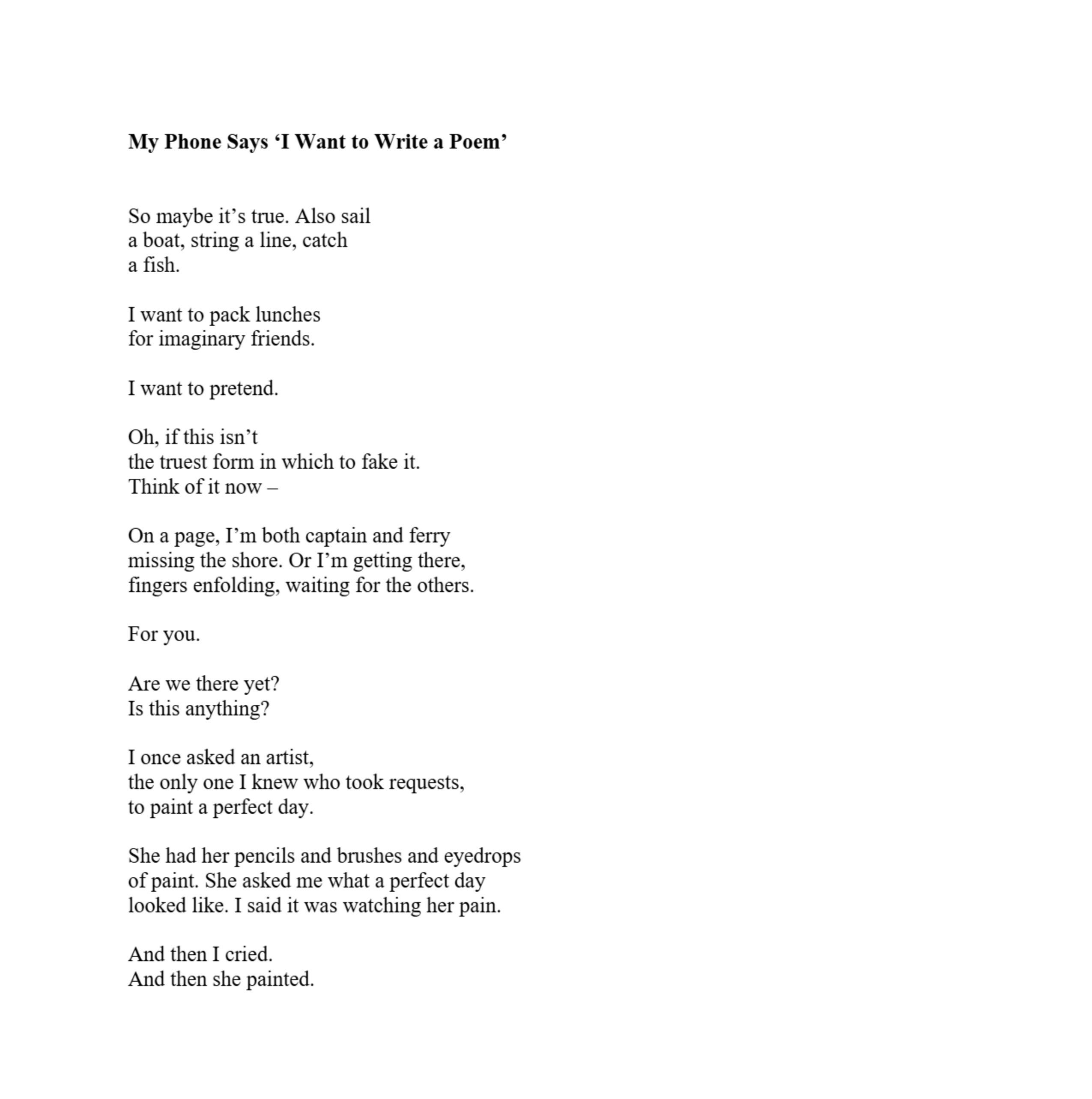
record of his mouth
he throws me bones, piles and piles
of bones until the residue on the carpet
is bone and my own eye becomes
bone. shifting to autumn, i topple
around on stilts, being made of bones,
and he will not carry me. if i speak
in the language of bones, he asks: what about
my white sail tearing in half, what about
the woman standing like a scarecrow
at the back of my throat, what about
my own need to sleep without hands in my hair?
so i wallow at the refrigerator door,
near the cold meats. so he keeps begging me
to be one thing. so he keeps flinging me further
and further away, into piles of leaves,
and i never grow fur.
after & aboard
easy to be meticulous and still ignore the iron
in the water the wool in patches in the grass
or how i simply had no head about it you understand
amiss with waves crackling stern-side
oddly straining to upheave what was caught
on a clear line
i made you out of a marigold root & decay
offering used towels a dryer folding in on itself
i made you from bamboo reeds i slew slender
at dusk a bed of them
we were together and yet you drew up
the image of another tongue
what was a tongue a hilt the waves
gripping my teeth
wasn’t it easier you know to be floating
away from land and afire
Mackenzie Kozak is the author of no swaddle (University of Iowa Press, 2025), selected by Brenda Shaughnessy for the Iowa Poetry Prize. Her work has appeared in Boston Review, Colorado Review, DIAGRAM, Missouri Review, Sixth Finch, and elsewhere. Mackenzie serves as an associate editor at Orison Books and works as a grief therapist in Asheville, North Carolina.
Quicksand, the worst possible way to die.
It terrified me as a kid. Worse than
piranhas or red ants swarming, the more
you thrashed, the faster quicksand
gobbled you up. My mom’s button jar,
touch and touch and touch, also my dad’s
beard, ah sensation, fingers greedy
for one more pass. Ghosts, I pictured
them licking graves, slithering out
of broken windows, up and up
they went. Also the opposite, gravity:
how it pulled the helpless world down.
Like the time my foot slipped climbing
our maple and I woke in the hospital,
with two busted wrists. Birds defied
gravity, also smoke and helicopters.
And if one day I died in a car crash
like my uncle, I would defy gravity too,
my spirit drifting like a blue balloon.
Pomegranates, we only got them at
Christmas. Slowly, that’s how I ate
mine, bead by bead, as if taking red
secrets into my body. My mother’s spit,
how she licked her thumb, scrubbing
at a stain on my face till God shrugged
and declared me clean enough for now.
Former poet laureate of Utah, Lance Larsen grew up in the West, mowing lawns, delivering newspapers, and dreaming of catching Bigfoot on film. His sixth poetry collection, Making a Kingdom of It, appeared in December 2024 with Tampa. His honors include a Pushcart Prize, an NEA fellowship, the Tampa Review Prize, inclusion in Best American Poetry, and first place awards from The Sewanee Review, Swamp Pink, and The Missouri Review. He teaches at Brigham Young University and likes to fool around with aphorisms: “A woman needs a man the way a manatee needs a glockenspiel.” Sometimes he juggles.
Carrying a fortune-telling fish
and an unborn child,
a fourteen-year-old girl
hauls herself
through an Indiana bus terminal.
She steals five dollars
from the mini mart tip jar
and continues her argument
with God. Did the Father see
her father, beneath the paisley sheets?
His green eyes pilfered
her nightlight’s glow. He left
chocolate eggs wrapped in foil,
an eye shadow palette,
and a fortune-telling fish
that wriggles and flips in her palm,
as if to free itself from a line.
Jennifer Markell's first poetry collection, Samsara, (Turning Point, 2014) was named a “Must Read” by the Massachusetts Book Awards in 2015. In 2021, Main Street Rag published her second book of poetry, Singing at High Altitude. Jennifer's work has been included in The Bitter Oleander, Consequence, Diode, Hunger Mountain, RHINO, and The Women’s Review of Books, among other publications. Awards include the Barbara Bradley and Firman Houghton Awards from the New England Poetry Club, Special Merit Finalist in the Comstock Review Awards issue, and Finalist for the Rita Dove Poetry Prize (International Literary Awards, Salem College.) In her work as a psychotherapist and writer, she honors the power of words to help us know what we know and feel what we feel.
Leslie Morris lives in Austin, Texas where she worked in the public schools. Her work has appeared in The Cincinnati Review, New Ohio Review, SWWIM Every Day and other places.
Maybe fields burn because they have
no other way to become sky. Maybe you
burned because you had to
prove you were made of the same stuff
as the sun. And maybe the message was
your way of staying, of speaking
last and lasting. (We never asked
you to show us how to star. We never
stopped begging you to take
a seat beside us.) Now you are played
sometimes when we get weepy in seedy
bars at last call—a voice with no body.
John A. Nieves has poems forthcoming or recently published in journals such as: Alaska Quarterly Review, Iowa Review, American Poetry Review, swamp pink and 32 Poems. A 2025 Pushcart Prize winner, he also won the Indiana Review Poetry Contest and his first book, Curio, won the Elixir Press Annual Poetry Award Judge’s Prize. He is associate professor of English at Salisbury University and an editor of The Shore Poetry.
Timelines
By moving to the woods, we saved our daughter
from TV and traffic and instead
gave her a forest and its mountain. So we said.
I wanted us to gather around slow-rising bread,
but trees kept falling over and the river rose
from beneath the floorboards. Then the bear
showed up at the edge of our yard
and watched us like we were a slow, beautiful film
about how to savor food. We had to call in the neighbor
who was angry about his one bad eye
because it wouldn’t let him be a sniper
for the good of our country.
In a world where you can be anything,
his bumper sticker said, be a motherfucker.
There was so much silence up there.
It was like snow, but personal and not beautiful.
And the larger world was dying. Our neighbor
was one eye short of being a terrific killer. Years later
my marriage and all my dogs from that time
died. I sometimes write to things that won’t
write back:
to stars, to the bear who sniffed the air
when I returned home from work, inhaling as if I, I,
would star as the most important cells of its next hibernation.
The failed sniper who cleaned bears
out of people’s lives wheeled in a giant length of culvert
made into a trap. He filled it
with sheet cakes and a holy maple bar, and the bear went in.
What happens next is I miss
my daughter before she even grows up.
I keep saying to her: look at the sky.
It’s what we’ll always have together.
The Clarity
My husband, fresh back from a walk among the blossoms,
he sees me and shares that on this summer day
he loves me, more than he knew possible,
and he can’t wait to collaborate, with me,
on a divorce. This idea came to him: the clarity,
while on his walk, while he talked with Bob,
the city planner whose eyes kept trying to explode,
and so Bob had valves implanted in them. Valves
that must be pressed to relieve the pressure.
It’s like magic: just press an eye, and the pain—gone.
Bob thinks collaborative divorce is best
because it’s something my husband and I can do
together, and Bob knows how much I love together.
My daughter just left for college, so I already know
what it feels like to be peeled to the dermis
and left in the rain. My husband produces a brochure
about how the collaboration works. Then his parents
send me an email to remind me of all they have
done for me and of what I need to do to make sure
their son’s life will not be made
uncomfortable by what he wants. A faraway friend
sends a photo of her gleaming table: set for two.
She says one of the places is always for me.
The only thing that could make it perfect
for the heart I have now is to set that room on fire.
Anything That Looks Like an Opening
Unforgivable, how good the windows are
at pitching their sale to the birds:
More air here. Come in.
We cut apart our shirts and made ropes
to hang over the glass: warn the birds.
Then we cut apart more of our clothes
to make face masks so we could have even more
distance from each other. Now
everything I wear has a future in protecting
the world from the world. Did you know
you can paint a collar gold
if you want your head to become a flower?
You can redden your cuffs if you want to show
where your hands will be when they have nothing
to hold. Inside, some of us are clouds
and some of us are windows who need a bird
to fly through. That’s how lonely we are.
Wheat Body
Walking is a form of rhythm, so the Holy Saint People
of Never-to-Dance are unsure of how to cross
the morning field. Song of Roots. Song of Pulled Grass.
The one whose body
is made of wheat steps into the ringing.
The cowbell that is almost music warms where it rests
against the cow’s body. The ringing requires distance
from the body. It also requires the body.
If religion shall take away the dance, then breath
becomes dancing.
In the classroom children wash their feet.
Single file, they wait for the world to spin them
into their lives.
You can learn to breathe by letting go of your stomach.
When Danny hesitated before kissing me
I could feel the pulse in his neck.
The rush inside of him was made of beyond-him.
It was good, that walking-through.
The children may sing as they walk. They are allowed to do so
as long as the song does not enter the body as dancing.
Though the lungs are bellows. The chest,
expansion. This is rhythm. The children of sky bodies
and April. Next year, my arms will try again
to hold this world, and fail.
Jennifer Oakes is a poet and novelist. Her most recent book, We Can’t Tell If the Constellations Love Us (42 Miles Press) won the 42 Miles Poetry Prize. Previous books of poems—The Declarable Future and The Mouths of Grazing Things (University of Wisconsin Press)—were awarded the Four Lakes Prize and the Brittingham Prize, respectively. A frequent collaborator with visual artists, Jennifer’s work can be seen inscribed on basalt and pressed into license plates. Jennifer lives in Seattle, WA, where she teaches literature and writing.
Months: months,
experts say it’ll take
to replenish this lack
of rain the barges stuck,
Army Corp dredging,
muddy cracks in the riverbed,
a teenage girl mudlarking
for Ray-Bans beneath
what used to be a dock
under the Hernando de Soto bridge
near old Fort Pickering,
the river pulling away
from its banks
half-telling secrets: submerged
boats, trash, Civil War
bullets and belt buckles.
Nothing ever gets carried away
just buried in sediment.
I don’t know what’s worse—
imagining what’s submerged
or seeing it exposed,
like the woman
walking last month along
the banks who found
human ribs a jawbone.
Parts of the Platte tributary
have disappeared—
satellite imagery shows
a half-song of something
a narrative full of holes
nineteenth-century shipwreck,
pottery and glass, nails, bolts.
How many new oxbows
are forming? And where
did the fish go?
It took me half a lifetime to see
the river as a body
not a landmark—
on a map
the Mississippi Drainage Basin
mimics arteries
the way blood vessels branch
and combine—
as levels drop,
two feet more by next month,
worry is also tributary,
its confluence of small deluges, news reports.
I used to fear drowning strong currents,
now it’s quicksand, warnings
to carry a pistol on sandbars
to ward off wild hogs.
I’d like to dip my feet in again
the way I waded in the scale model
of the river—
its length, width, and depths—
at the now-defunct Mudd Island Museum
at the end of a long summer. This spine of water spent,
overwrought outdone
Lynn Pedersen’s poems have appeared or are forthcoming in New England Review, Ecotone, Nimrod, Bennington Review, Tupelo Quarterly, and Southern Poetry Review. She is the author of The Nomenclature of Small Things (Carnegie Mellon) and two chapbooks. A graduate of Vermont College of Fine Arts, she lives in Georgia.
Poem by Chen Poyu, translated from the Taiwanese Mandarin by Nicholas Wong
Chen Poyu is a poet, translator and literary critic from Taipei. He has published essays and poetry collections, including The Art of Rivalry, winner of Yang Mu Literary Awards in 2024. His recent publication, The Basement Tapes, is a book of collaborative texts and illustrations with Kuo Chien Yu. His Chinese translation of Robert Hass’s Summer Snow was published in 2022. He was also named one of the Ten Most Anticipated Writers born in the 1990s by Wenhsun Magazine in Taiwan.
Nicholas Wong is a poet, translator and visual artist from Hong Kong. He is the author of Crevasse, winner of the Lambda Literary Awards in Gay Poetry, and Besiege Me, also a Lammy finalist in the same category. His recent poems and translations can be found in The Georgia Review, Five Points, American Poetry Review, Yale Review, among others. He is an International Writing Program resident at the University of Iowa in 2024, and currently teaches at the Education University of Hong Kong.
for Simone Weil
She lived here, she would have walked on these coals,
the soles of her boots coming unstitched from the uppers.
The slate roofs must have shuddered
as she passed below, an avalanche of doves.
She was living in Morningside Heights with her mother
and father, a few blocks north of the church.
It would have been summer, late July or August.
Now it's summer again and the herbs
in the cloister garden are flourishing—
pennyroyal, fleur-de-lis, sour orange, meadowsweet.
I think she had a secret. She was studying to become
a nurse. She wanted the Allies to parachute a battalion
of white-clad girls into the center of combat
to be martyred. She wanted to be the first.
I don't know whether she was a saint
or just supremely narcissistic. Is there a difference?
Whether you spread outward until you fill the world,
or hollow yourself out to let the world in.
At any rate, she didn't die of starvation,
she was eating by the end—a forkful of potatoes,
an egg yolk swimming in sherry. Her letters to André
were buoyant. He was still in Bethlehem with Eveline,
working on finite fields and holomorphic functions,
theorems so abstract they could have fallen
from the sky. But everything exists
that exists in the mind. There is no death.
Only this: the walls of the self grow thin
and you hear voices on the other side—muffled
at first, then clearer. You can hear people's thoughts,
what they're dreaming.
Selena Spier's poems appear or are forthcoming in Pleiades, The Kenyon Review, The Threepenny Review, and elsewhere. She lives in New York City, where she works at the nonprofit Brooklyn Poets and co-curates the KGB Bar Monday Night Poetry Series.
Eloise Schultz lives in downeast Maine. She received an MFA from Oregon State University and her writing appears (or is forthcoming in) the Bicoastal Review, Sextet, Vernacular, and BRUISER, among others. Eloise's first chapbook of poetry is forthcoming from Alternating Current Press. She enjoys playing the flugelhorn.
Adam Tavel is the author of six books of poetry, including Rubble Square (Stephen F. Austin UP, 2022).


The editors share VCFA’s belief that the arts are central to the human experience and have the ability not only to reflect reality but also to create it. Our masthead changes annually, and our revolving list of faculty editors and contest judges reach into their diverse literary communities to help make them part of ours. This allows for aesthetic flexibility, guided by our steady ethics: promoting voices that have gone unheard, expanding our representation and scope,and critically examining our contemporary culture and our field.
We value vulnerability, adventure, and accessibility. Our student readers are the future of the literary world, and all of us take great pride in discovering new voices, as well as publishing the freshest work from established artists.
Past contributors to Hunger Mountain include Elizabeth Acevedo, Dilruba Ahmed, Pinckney Benedict, Rosebud Ben-Oni, Destiny O. Birdsong, Robin Black, Ron Carlson, Hayden Carruth, Lucy Corin, Kwame Dawes, Matthew Dickman, Mark Doty, Rita Dove, Santee Frazier, Terrance Hayes, Robin Hemley, Bob Hicok, Tony Hoagland, Lily Hoang, Pam Houston, Major Jackson, W. Todd Kaneko, Maxine Kumin, Dorianne Laux, Kelly Link, Robert Lopez, Sidney Lea, Michael Martone, Aimee Nezhukumatathil, Naomi Shihab Nye, Gregory Orr, Ann Pancake, Carl Phillips, Jordy Rosenberg, Tomaž Šalamun, Charles Simic, Jake Skeets, Patricia Smith, James Tate, Paul Tran, Jean Valentine, L. Lamar Wilson, Tiphanie Yanique, and many others.
Hunger Mountain was started in 2002 by founding editor Caroline Mercurio Spitzer through a generous donation from a Vermont College of Fine Arts MFA in Writing alumnx. The journal has since thrived with the assistance of MFA in Writing faculty and ongoing support from the Vermont College of Fine Arts, VCFA alumnx, subscribers and friends. Miciah Bay Gault served as editor in chief from 2009-2018. Erin Stalcup served as editor in chief from 2018-2021, and the journal is now run by faculty and students in VCFA’s MFA in Writing Program with faculty member Adam McOmber as editor in chief.
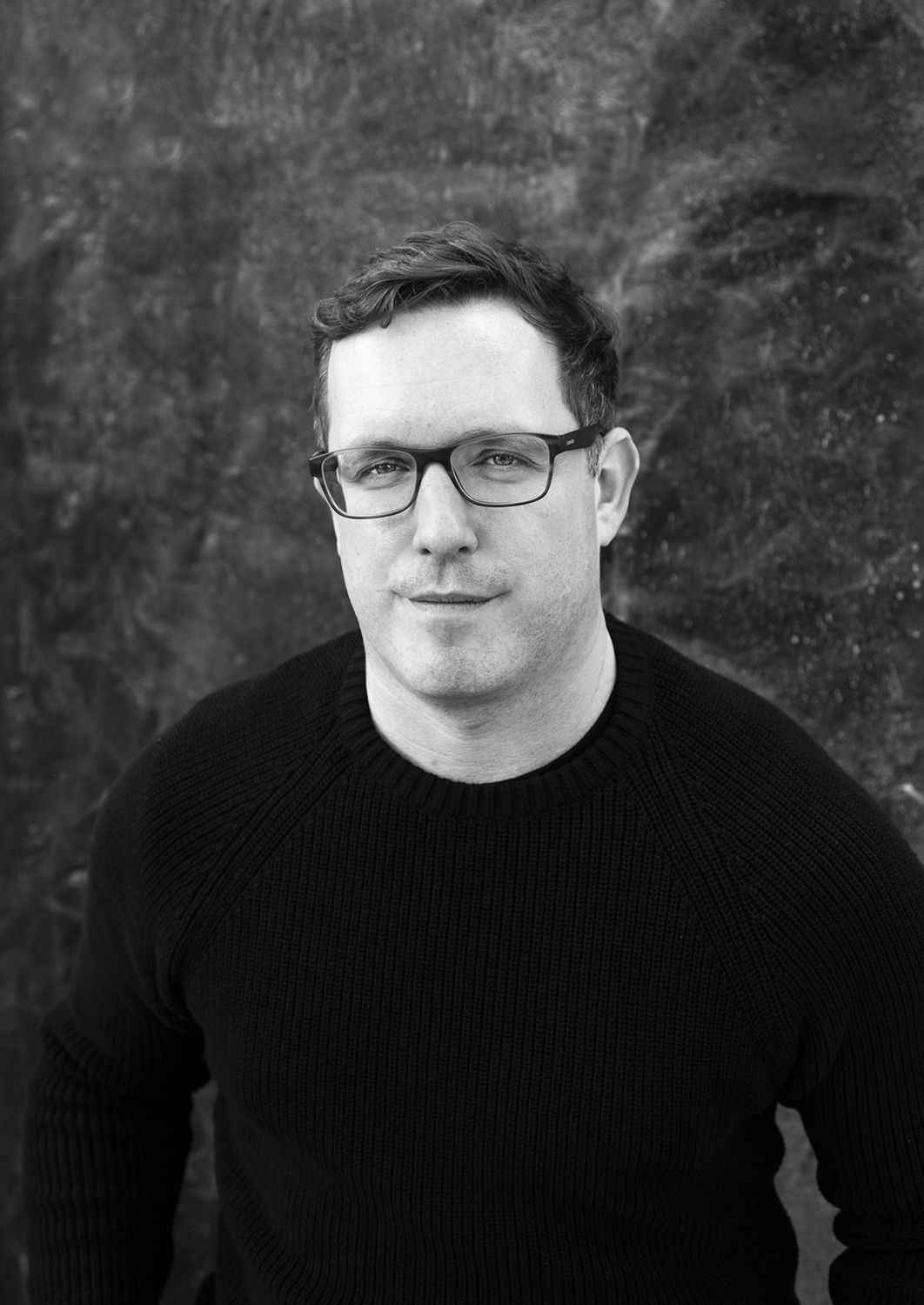
Adam McOmber is the author of three novels, The White Forest (Touchstone), Jesus and John (Lethe), and The Ghost Finders (JournalStone), as well as two collections of short stories: My House Gathers Desires (BOA) and This New & Poisonous Air (BOA). His new collection of queer flash and experimental fiction, Fantasy Kit, will be published by Black Lawrence Press in June 2022. He is currently working on a queer erotic revision of Arthur Conan Doyle’s The Hound of the Baskervilles that will be published by Lethe Press in digital monthly installments starting in September 2021.
His work has been included in The Year’s Best Speculative Gay Fiction and Best Microfiction and shortlisted for Best American Fantasy and Best Horror of the Year. His stories have appeared recently in Conjunctions, Kenyon Review, Fairy Tale Review, and Diagram. Adam is editor-in-chief of Hunger Mountain Review at VCFA.
Adam is an Ohio native, now residing in Los Angeles. He teaches in the Writing program at University of California Los Angeles and in the MFA in Writing program at Vermont College of Fine Arts. He is on the faculty of the VCFA Novel Retreat and serves as one of its manuscript mentors.
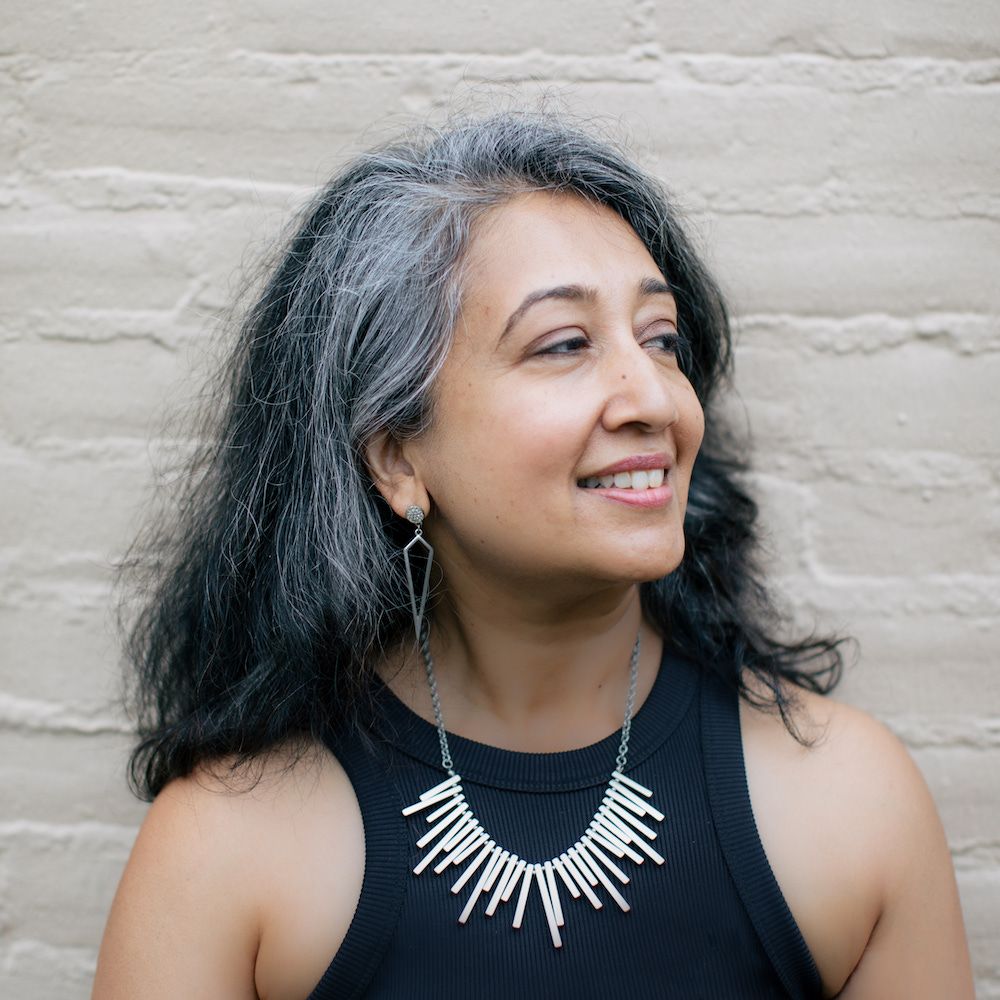
Hasanthika Sirisena is a writer. cartoonist, and teacher living in Philadelphia.

Nance Van Winckel is the author of nine poetry collections, most recently The Many Beds of Martha Washington (Pacific Northwest Poetry Series/Lynx House Press, 2021). She's also published a book of visual poems (Book of No Ledge) with Pleiades Press (2016), five books of fiction, including Ever Yrs, a novel in the form of a scrapbook (Twisted Road Publications, 2014), and a memoir entitled Sister Zero (Slant Books, 2022). The recipient of two NEA fellowships, the Washington State Book Award, a Paterson Fiction Prize, Poetry Society of America's Gordon Barber Poetry Award, a Christopher Isherwood Fiction Fellowship, and three Pushcart Prizes, Nance teaches in Vermont College’s MFA Program and lives in Spokane, Washington. Her author website is beloe. Her visual poetry website is http://photoemsbynancevanwinckel.zenfolio.com
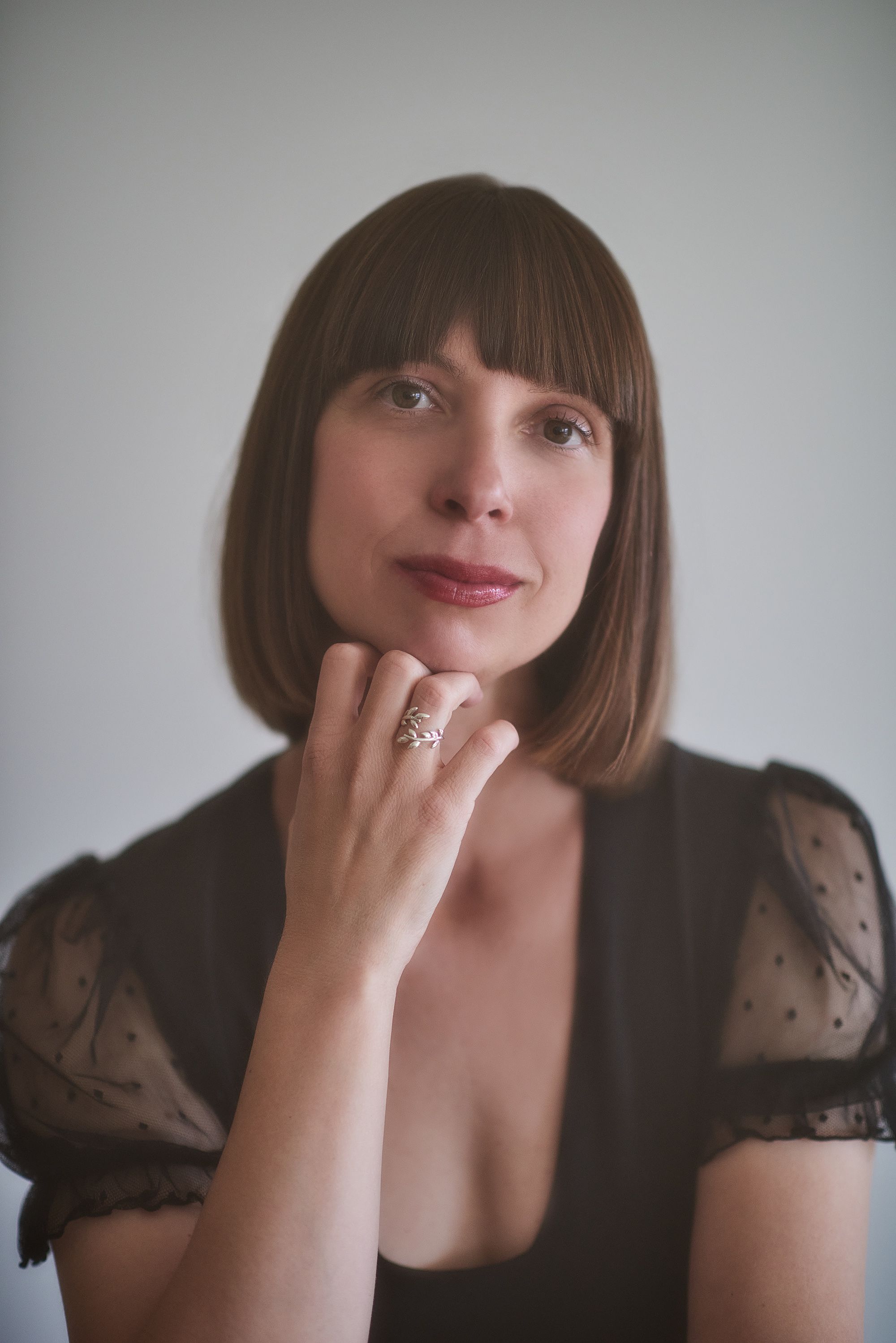
Montserrat Andrée Carty is a Spanish-American writer, photographer, and the Interviews Editor for Hunger Mountain. She holds an MFA in Writing from Vermont College of Fine Arts and is working on her first book. Find her online at www.montseandree.com.
Kurtiss Limbrick is an American artist and poet. They have a BA in Creative Writing from Arizona State University and currently attend the low-residency MFA program for Creative Writing at Vermont College of Fine Arts.
Most recently, Kurt has published work in Pile Press and Reed Magazine and has work forthcoming in the Georgia Review.
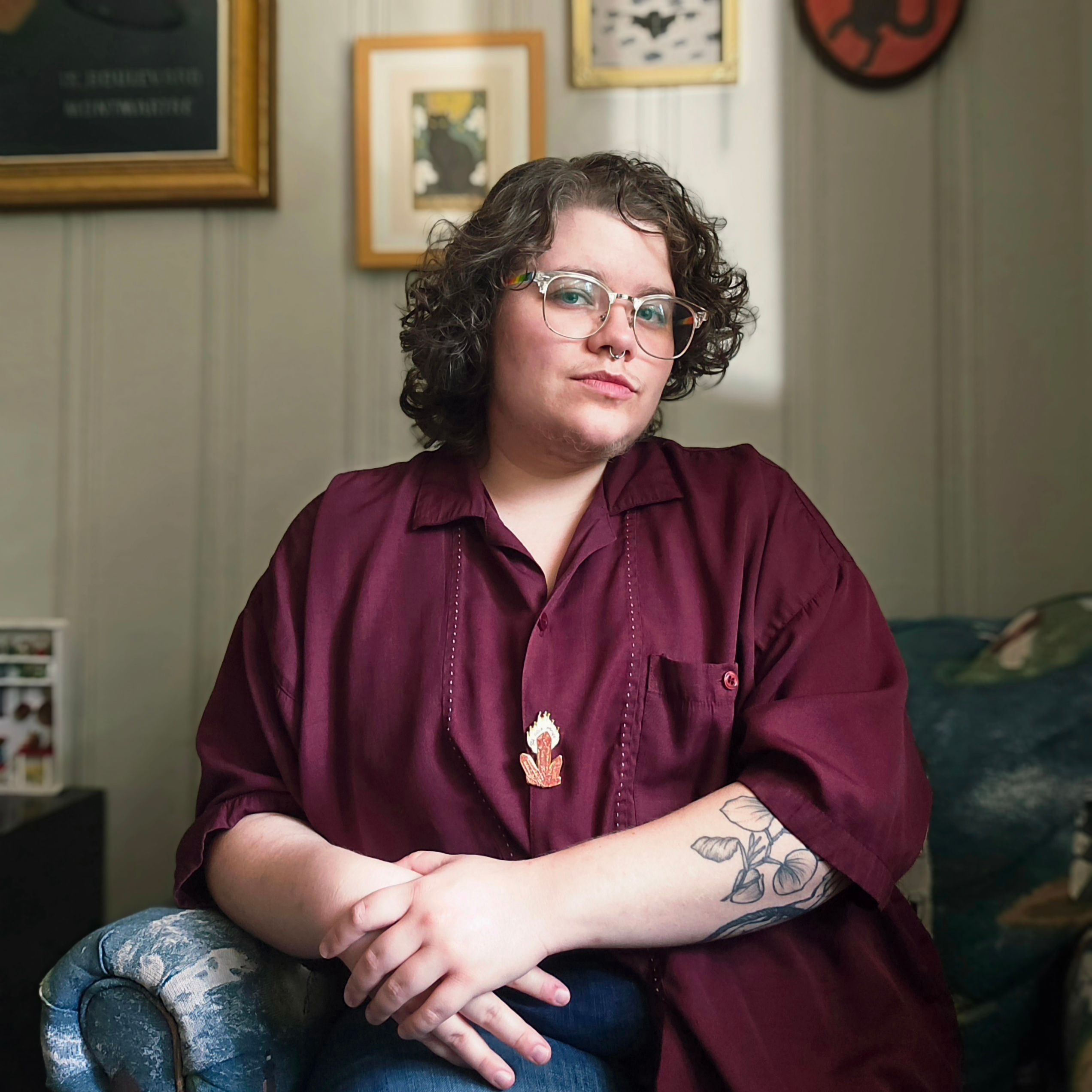
Vern Holland is a queer & trans writer based near Raleigh, North Carolina. They received their MFA in Writing from the Vermont College of Fine Arts and BA in English from UNC Asheville. Currently, Vern is an independent bookseller and is Co-Managing Editor of Hunger Mountain Review. Their stories often explore intimacy, fatness, genderfuckery, and grief. If you’re looking for Vern, just look into the nearest mirror and say their name three times, or follow their Substack “Writing Feral.”
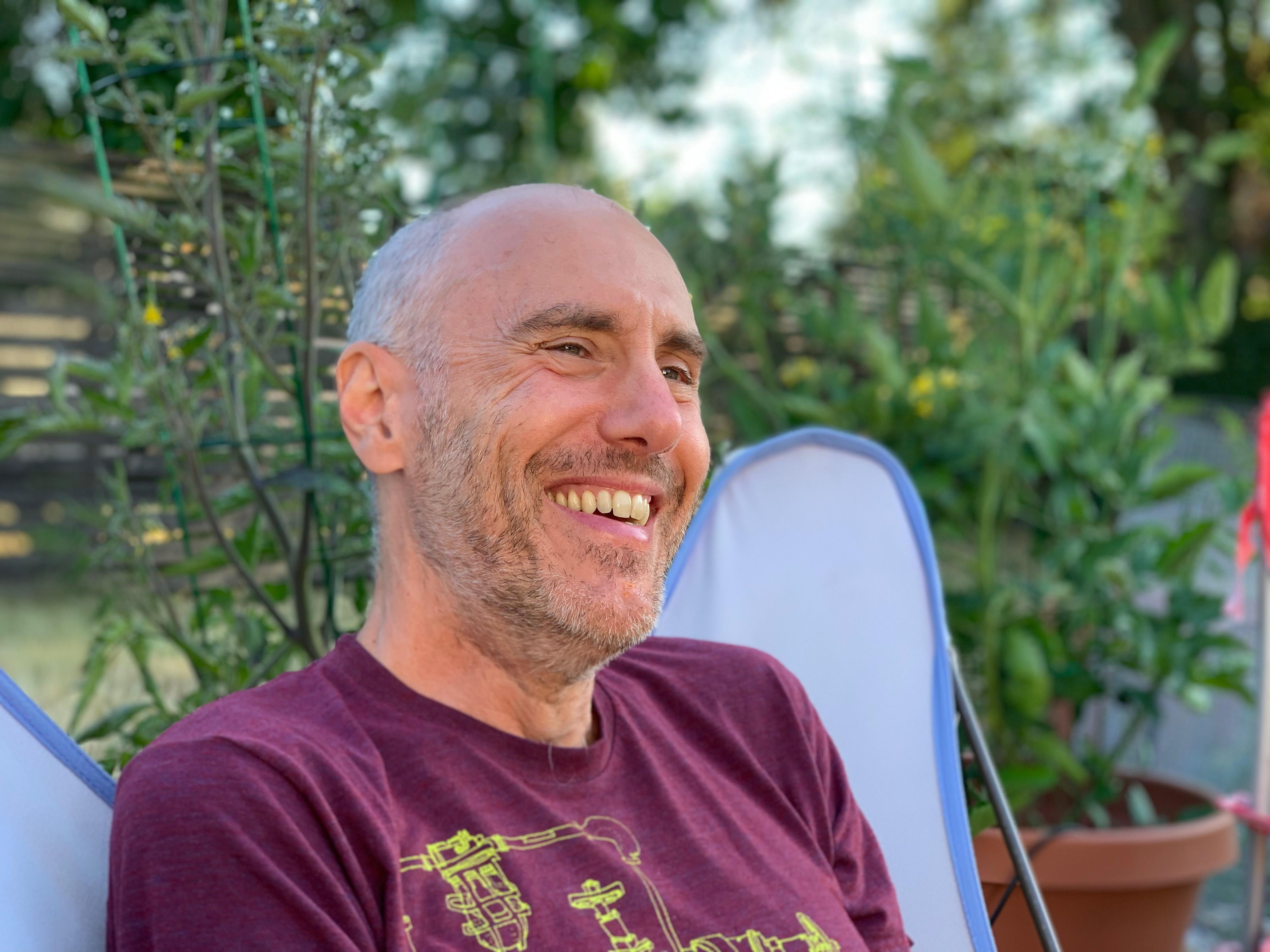
Todd Poremba works in technology in Seattle, Washington. He earned an
MFA in fiction writing from the Vermont College of Fine Arts.