My father’s name was Sebastian or Sammy. Yiano to his sisters who, when he was born in 1931, were so young they could not fully pronounce his name. “Suh-bahs-tee-anno!” said my grandmother. “Yiano!” said they, faithfully reproducing the final sound. It is said that old women can’t hear low-pitched sounds, like the gravelly voices of old men. Old men, on the other hand, can’t hear high pitched tones, like the pursed exclamations of old women. This is how they get along. Children only hear the final syllables. This is why, “No, Tina.” or “Timeout, Tina!” does not work as well as “Tina, for fuck’s sake, NO!”
My father was twenty when he shipped out for the war in Korea, promising my mother, the ballet dancer, that they would marry on his return. So, she gave up her scholarship to college and buckled down, which in immigrant parlance means she took a job, apprenticed to a trade to make money. She became a beautician, not a very good one, who could turn red hair into a green surprise, and waited, which was what all good women of the lower classes did in that day and time.
He never talked about the war. Most fathers don’t. I don’t know why. Men have told me many war stories they would not tell their children or their wives. Over desks. Over beers. Occasionally in my arms. But today my father calls. He has written a memoir about the war. He wants my professional comments. Like him, it will be well-structured and honest to a fault.
My father, like most people, bowed to conformity of his times. “I have one word for you, son,” says Mr. Robinson to Benjamin in the film The Graduate, trying to coerce him into the status quo. “Plastics.” For what it is worth, Mr. Robinson was unaware that he was being cuckolded and that the perpetrator of this cuckolding was young Benjamin. My father, too, was a plastics man, as in Dupont, Interchemical, Olivetti and Dow, but he writes without a trace of plasticity.
“Physicists tell us,” my father writes, “that time is relative. … A moment of intense pain is an eternity in perception. The time I served in Korea was fifteen months, only three months in a combat zone, yet it seems half a lifetime.” He goes on. “At the age of 71,” (Can he be that old?) “I think back in memory to half a lifetime of experiences, which shaped my later life. It seems the greatest part of my past was in combat.” (Not with us? Not with me?) “That was when the experiences were new, intense, and often very frightening.” I had always imagined my birth would be frightening to him, frightening and elating, but after Korea, my mother must have seemed like milk soup. He would have been happy to lay his head in her lap, if she would just sit still. He spent all of his life trying to bring her to stillness–the one thing she could not be.
My father was a Brancato, an honest man who lives in the land of denial. This is not the paradox it seems. To some extent, we all live in denial. No one wants to roam around constantly aware of the reality of his or her own end, for instance, even if death is a certainty. There are levels of honesty from which we need protection, and we have it, not just in the white lies of friends and family but because we cannot attend to all things at once. Where my father registered a blue sky, the warmth of the sun on his face and maybe a splinter in his finger, I would register the shark slipping past the boat, a dark form in the water. If I asked, he would say it was only a shadow. We swam side-by-side at the same moment and in the same sea. Perhaps others would argue otherwise but that is how a child sees it, and I could not grasp how we did not have the same experience–that he could be with my mother, disintegrated as she was, love her, take her to bed. I wanted to believe in my father, not just to believe him. When he told me the little circles I saw when I looked up at the sky were the insides of my own eyes–me seeing the backs of my retinae against a perfect blue sky–then showed me, moving my head side to side, the circles staying still–I believed in him. When he showed me how to gain an extra two whole seconds in the 50-yard dash, by crouching on the starting blocks and leaning ever so slightly on my fingers, he was right. I believed, but what each of us brought to the foreground and what each let slip back was quite different.
What complicated the matter was neither of us could fully control what we saw or did not see, experienced or did not experience. We were different sexes, different ages, the products of different parents in different times. Very young, I could feel my separateness from him and worked against it best I could. Yes father, it is only a shadow. Shadows happen all the time.
My father was born in the depression, about the time Seabiscuit, the improbable horse, stumbled and then rose to fame. In those days, a man would kill for a potato. It does not make for the embracing of a bigger picture. A gang of boys would steal a bag of potatoes to cook them, amidst the refuse of their generation, over an illegal fire. No sharks, my daughter, just shadows that will pass you by.
Perhaps my father was right. I am, after all, still here. Still intact, writing this article, showing pieces of the shadows to my father and anyone who cares to listen.
Nevertheless, most people prefer denying another person’s reality to renouncing their own experience. If I had to come down on one side or the other, I would have to say that it was arguably better for my father to renounce my reality than endorse it. Better that I dealt with two realities, because, in fact, I was the stronger. Recognition of the truth might break him. And then what? It takes a giant to pick, then act, on the reality that is not one’s own–maybe not even anybody else’s–just the one that makes the most positive contribution to the world at large. My father, in his defense of my mother and his attempt to protect us from the truth, tried to be that kind of giant.
My father was so clear about the war in Korea and so obtuse about the war within our family. Or perhaps he saw, and what he saw so frightened him that it was buried with the memories of Christmas Hill, 1953, three years before I was born. “We ran up the hill in one line towards our forward machine gun positions. The night air was filled with incoherent noise. Shouting of orders, machine gun staccato, small arms fire, and loud blasts of exploding mortar shells assaulted my senses. The trajectory of tracer bullets crisscrossed overhead. An occasional flare lit the dark sky as bright flashes of the exploding mortar rounds lit up the trenches ahead of us. Small clouds of smoke and the pungent smell of burning gunpowder filled the air.” Pure poetry. This from a man who, reading Dylan Thomas’s famous poem about raging against the darkness, said: “I don’t understand. What is he talking about … death? Why doesn’t he just say what he means?”
One well-placed bullet and my father would have been gone and I would not be here, then everything that happened maybe would never have happened. It is so, I am told, in some alternative universe somewhere. My father, the scientist, has often speculated upon the fact.
His diary continues. “As I followed my squad leader into this cauldron of hell, I looked down at the peaceful valley to the right. In darkness, with all the confusion, I could easily slip down into the peaceful valley. No one would miss me. The valley beckoned, a safe haven where I was sure to survive the night and return in the morning, unscathed. Up ahead was ‘Hell on Earth’. I might not survive. … I might not. I hesitated. No one would ever know … except me, and I could not live the rest of my life, a coward who deserted his comrades.”
My father was a loyal man. He stayed in his marriage because of us and the church, because of the fear that he couldn’t love his wife and eventually because he loved her. “After a brief hesitation, I ran up the hill following my squad leader to repel the foe.” Here, oddly enough, my father skips the battle entirely, the thing, perhaps, an avid reader like myself might really want to hear and goes straight to: “Suffering an honorable death was preferable to living out one’s life as a coward.” That alone, his omission of the battle, tells me how horrible it was. How fragile my young father. And that such fragility could kill. This is the twisted soul of war. This is its true darkness, like the attraction and repulsion of an ugly lover whose genitals are interesting nonetheless.
My father would have seen his desertion of my mother as a treacherous act, against the family, against the church, against the fabric of a society that, in his own way, he had helped to create. He had withstood the war. He could withstand this marriage. He could straighten the spines of his children so they could withstand it too. He would do so with as much honesty as he could muster, if not with as much truth. There simply was no other alternative.
I want to reach out to my father, boy that he was, man looking back. I want to say, “If only it were all so simple.” I want to cut open the deep hurt inside. I want his rage to be lively, transformative, impactful–like energy through an iron and back. I want to say he couldn’t have been braver, how could he? That he could/did change the world. My father. I am me, after all, and that is no small thing. I want to say he was and is a giant who picked a reality that would make the world a better place, then he made it happen. Is that not what every man wants to achieve? I do not really want him to see the past. Not any of it. Not as it was. In my mind’s eye, I see him as a hero. I imagine him praying. “Father, if it is possible, let this cup pass me by,” but it was not possible, not for him.
The following is what I wrote after I read my father’s memoir.
EXT. CHRISTMAS HILL, 1954 - NIGHT
Shrapnel and mortar fire cut the sky like jewels, plumes of attendant smoke obscuring low stars and a harvest moon.
Under this smoggy blanket, Sergeant BRANCATO (22), Robert Mitchum like, leads a rag-tag team of TWENTY SOLDIERS (17 to 24)–mostly cooks, technicians and medical assistants – up a hill, through successive mortar rounds.
The flack thickens, explosions rocking the countryside.
BRANCATO
Get down! I said, down!
The men drop to their bellies and crawl, with the click clack of their guns in front of them.
TONY BLANDEZ (21), the cook, is hit in the leg, his scream piercing the night. J.J. (18), tech man, scrambles over to help. J.J.’s hit in the neck. He’s gone.
LIEUTENANT BRADY (20), aka Snake, is also hit. Brancato crawls to him, turns him over.
BRANCATO
Brady?
There’s a hole where Brady's stomach was. Brancato reaches up and closes Brady's eyes.
The men keep crawling forward, taking enormous flack. Brancato finally grabs the com.
BRANCATO (ON COM)
We’re getting’ hit bad. We need rein-
forcements.
COMMANDER (V/O)
Roger, Sergeant. Hold your ground.
A vast explosion, a crater: FIVE MEN tossed in the air.
BRANCATO
Hold what ground?
Brancato watches the bodies fly apart. A leg, still in pants, is caught in a tree. Corona, a.k.a. MAILMAN (17), starts to cry
Brancato, deafened by the blast, jumps up, waves his arms and shouts. At least, he thinks he’s shouting.
BRANCATO
Pull back. I said, pull back!
But the men, stunned, cannot hear him. He cannot even hear himself.
BRANCATO
Aw, shit!
Brancato grabs the nearest PRIVATE, drags him to his feet, and pushes him along. The men, understanding now, follow quickly, crouched and low to the ground.
Mailman suddenly screams. The kid’s foot is caught on a land mine. He cannot move forward. He cannot move back.
Brancato pauses. Looks down. There is nothing he can do here. Mailman knows he must not move.
The troops continue on, Brancato following. A moment later, Mailman’s body is rocked by machine gun fire.
Brancato turns back and watches as Mailman, still struggling to stand, drops to the ground and explodes.
What one does not know one imagines. It is the insanity of the writer to go back and try to see what was unseen, to let the action hit the mind’s eye, full-force. That’s life, but ironically, no it is not. It is only a movie.
Most of our foot soldiers in the Korean War were in their late teens or early twenties. Training and fitness cannot completely explain why these men persisted in their duty. Loyalty was one reason. Bravery, another. I think love was the main reason my father stuck it out, rooted in a deep compassion for his fellow foot soldiers, his devotion to his men, his hatred of destruction.
My father and I have a lot in common. It is not that we are not afraid. It is just that we are braver than most people and that we love too much. He is structured, duty bound, while I am his reckless daughter. Stoic on the outside, loyal to the depths, tethered to one another by the slightest sharpest shadow, we have both survived.
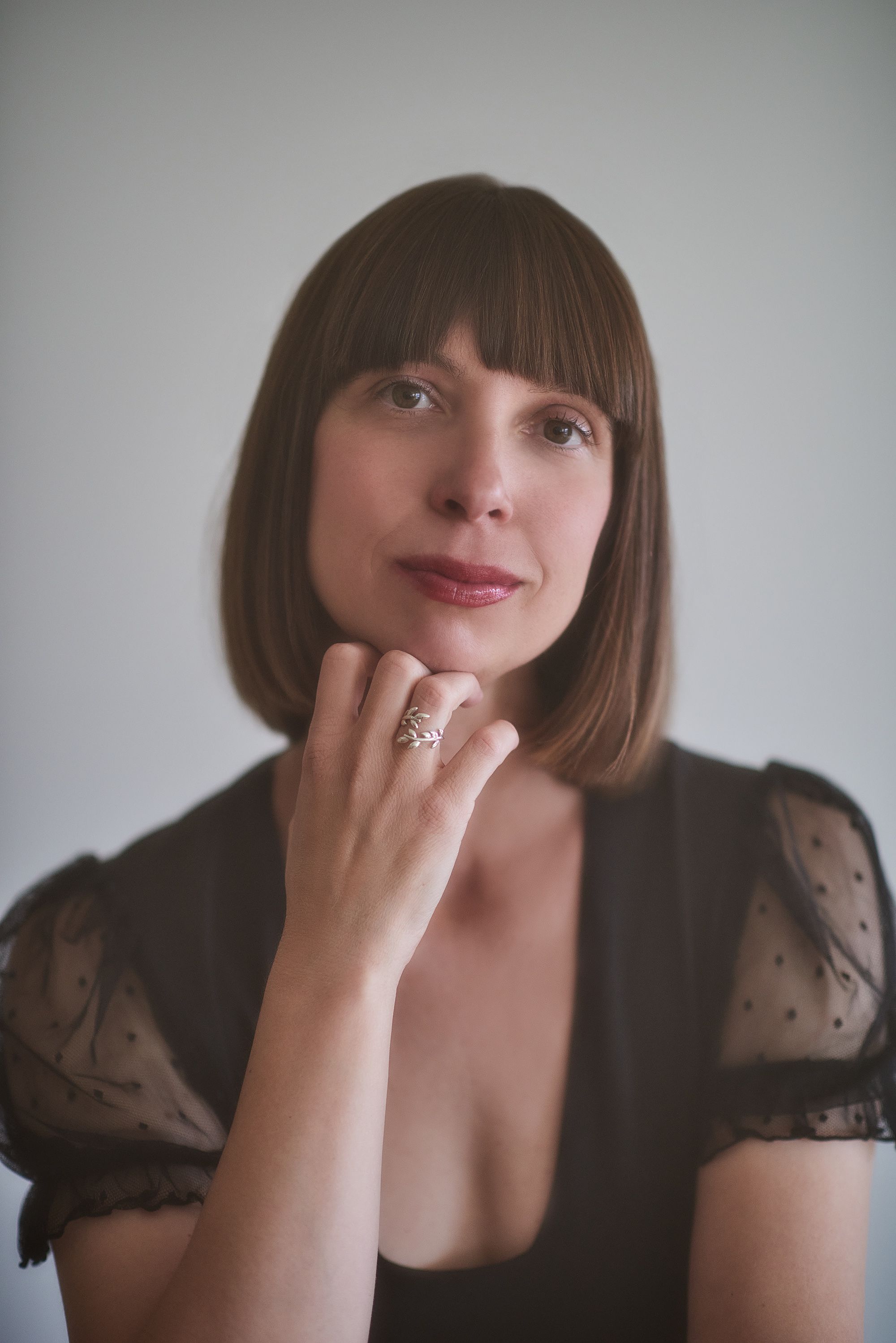
Paula C. Brancato
Paula Brancato is a NY-based writer, poet and filmmaker. One of the first women on Wall Street, and a McKinsey consultant and a planner for the World Bank. She is now CEO of her own financial firm—experiences that have added to her unique creative voice. Paula's literary awards include The Booth Poetry Prize, Danahy Fiction Prize and Brushfire Poet Award. Her work has appeared in The Southern Review, Kenyon Review, Mudfish, Bomb Magazine, Virginia Quarterly, Ambit Magazine, Georgetown Review, Litchfield Review and Southern California Anthology, among others. She is currently working on a full-length poetry book, The Bestiary and a first novel called Wild Joy. Paula taught poetry and screenwriting at USC, Stonybrook Southampton and the Harvard Club of New York. She’s a graduate of Harvard Business School, Hunter College and LA Film School and lives in New Jersey with her partner Jason and their 60-pound furbaby, Myrtle the Dog