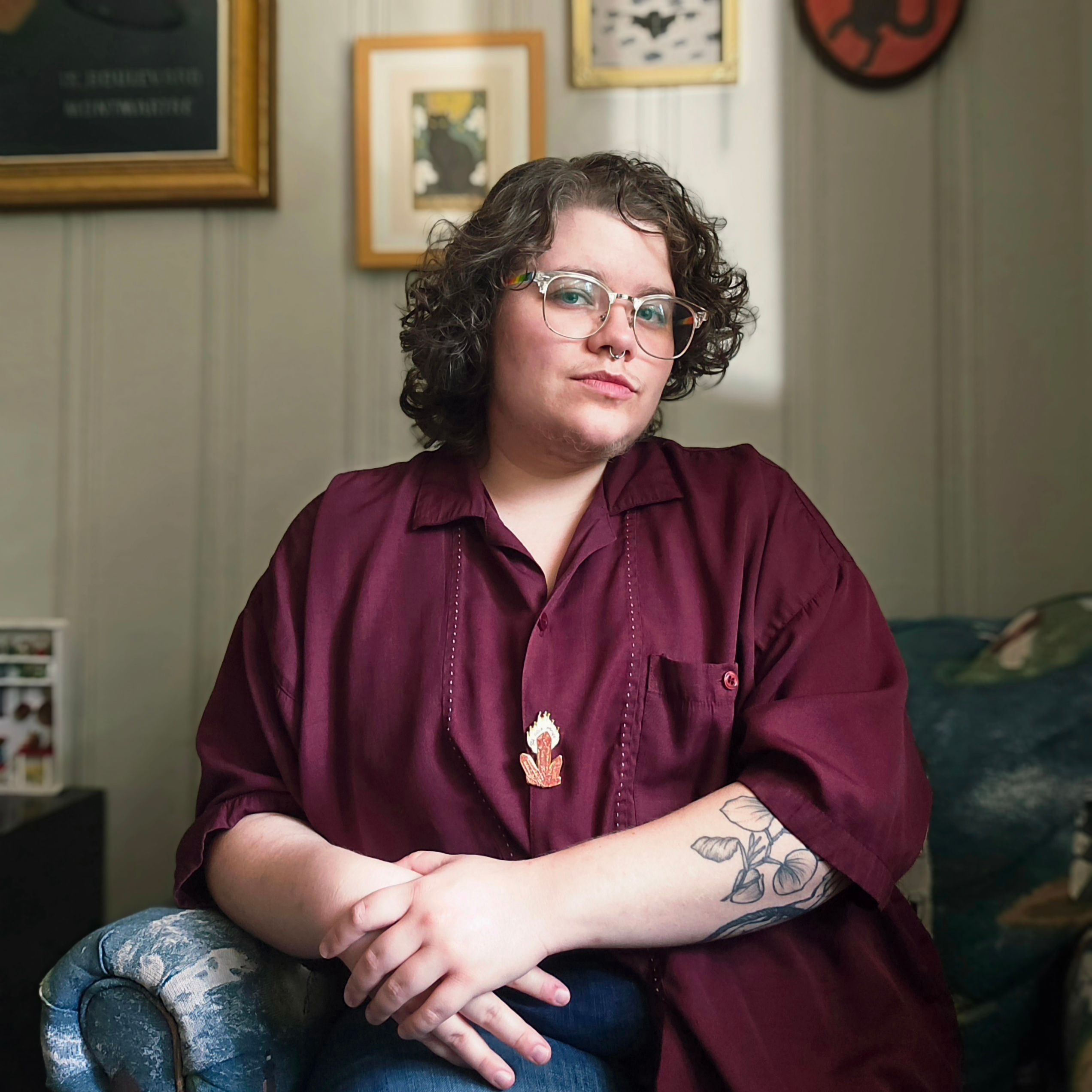
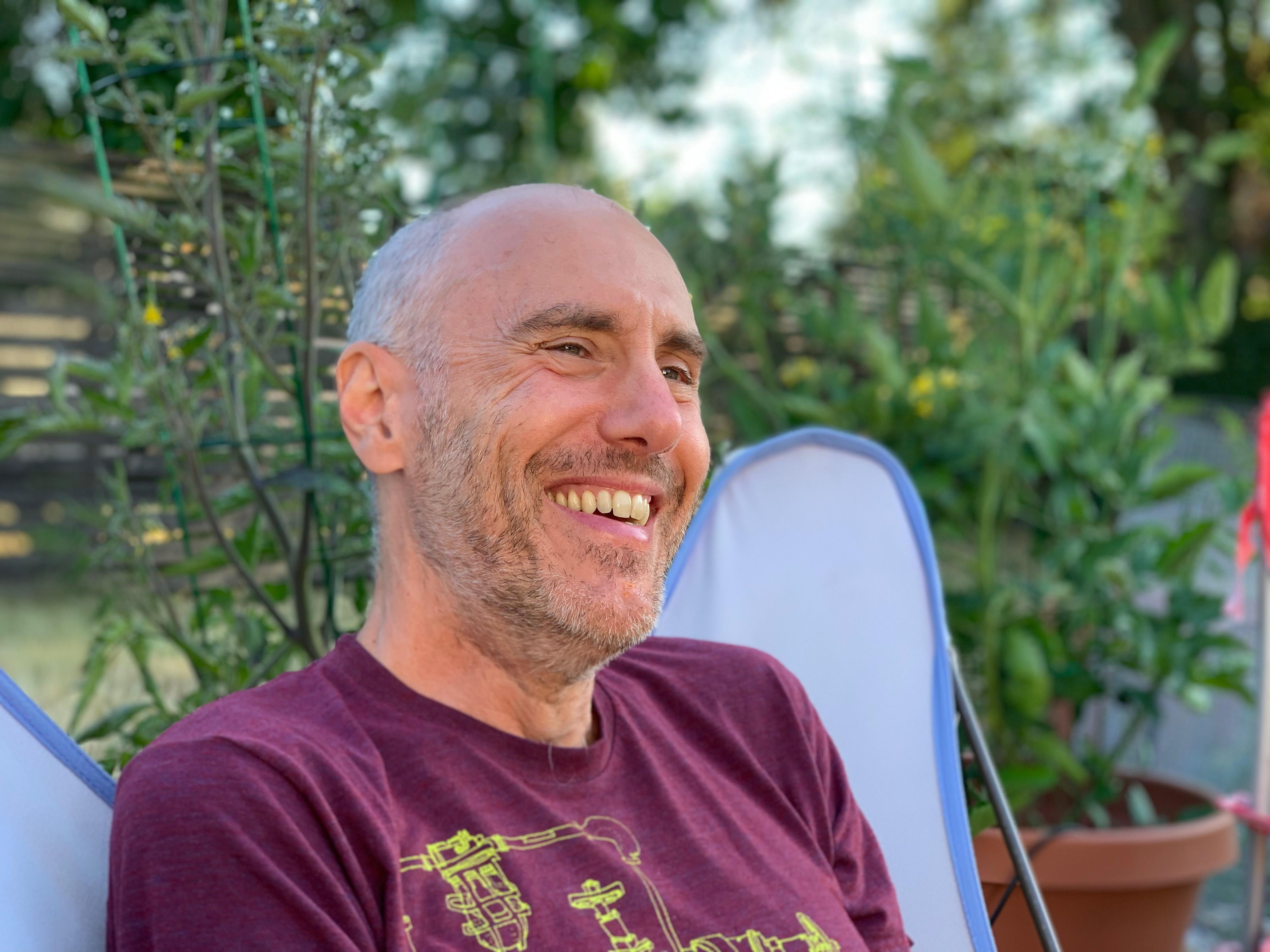
Nicole Mills: I am so excited to catch up with you! Do you know that we have known each other for 23 years? I remember when I met you when I started at the magazine in 2003, and I learned you were an author. I went right out and bought Boy Still Missing. I don’t think I ever told you, but I became an immediate fan girl. And I am really excited for your new book! What can you tell me about it?
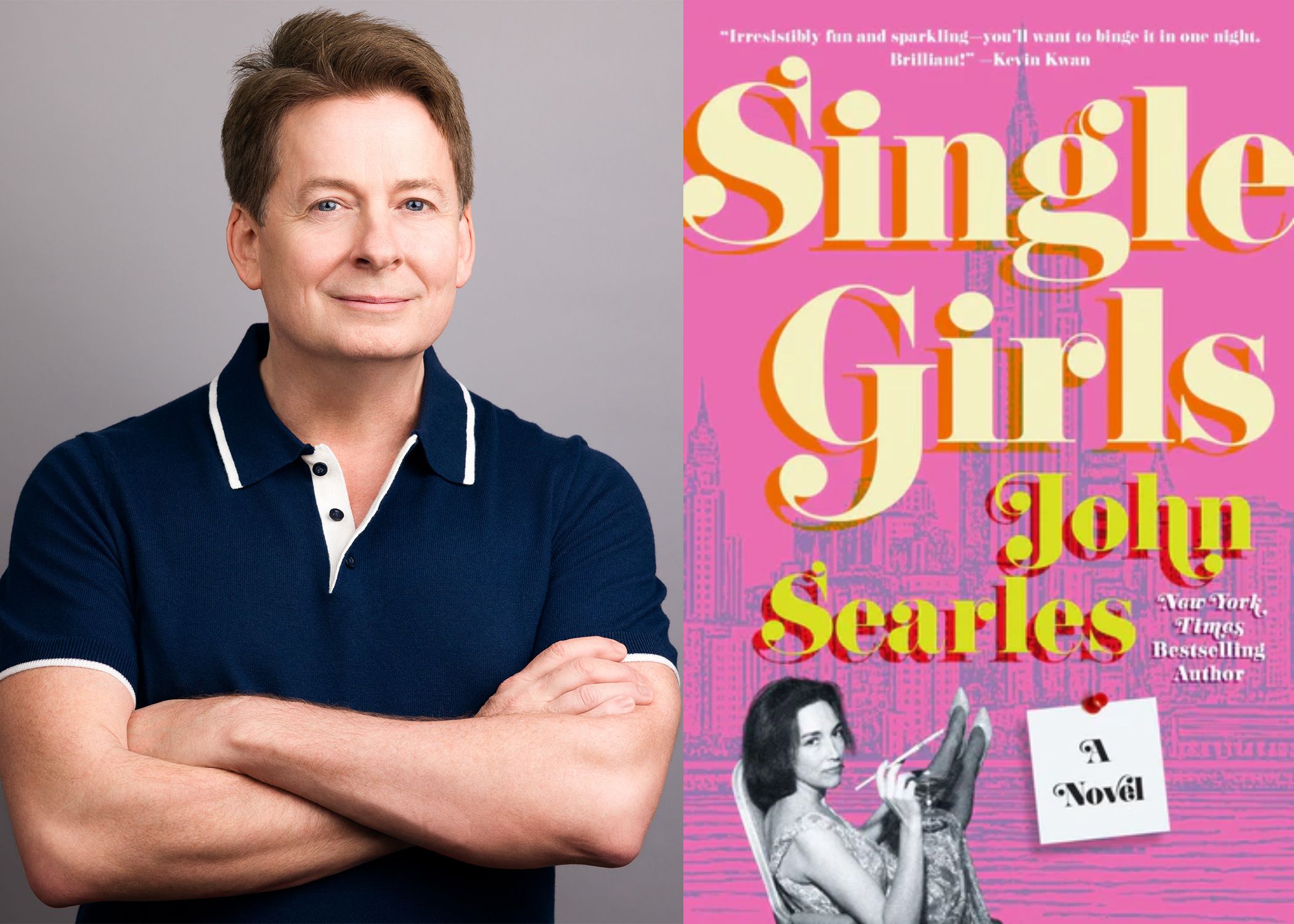
John Searles: Thank you, Nicole! Wow, I can’t believe it’s been that long! I always love our chats and remember our run-ins on the subway downtown some nights after work. And I’m looking forward to reading your book someday, too. As for my new novel, it’s called Single Girls and is set in the world of women’s magazines in the 1960s. It’s not a suspense novel, so very unlike my other books. For years, I’d give talks at libraries or bookstores and readers would come up to me and say, “You’re so cheerful but your novels are so dark and eerie.” Ha! Well, Single Girls is a book for all those people who wanted a joyful novel from me. It's uplifting and funny and heartfelt and is a fictionalization of Helen Gurley Brown’s early years at Cosmo and the team of women she hired to transform it into the most successful women’s magazine of all time.
NM: It sounds so fun, I can’t wait to read it. But it’s true, you do have a kind of dark sensibility in your previous books—there is a whiff of something otherworldly or supernatural in your work that heightens the suspense and lingers even after the mystery has been revealed to be not-supernatural—just kind of twisted—the “spooky stuff” is usually less sinister than what is actually happening in your books. What draws you to that sort of flirting with the edge of speculative fiction? Do you believe in spooky stuff?
JS: I had a very colorful and kooky childhood, which often had a dark sensibility of its own. My father was a cross-country trucker and I used to go with him on trips in the summer. We met any number of odd and suspicious characters along the way. Back home, my mom’s friend used to babysit us and would show up with her Ouji board in tow…and tell my brother and sisters and me about the many psychics she visited. I loved scary movies and books. And on a more serious level, I’ll just say the drama of my parents’ marriage, which I was pulled into from a very young age, gave me a sense of anxiety and doom that I think comes out in my stories.
Oh, and I don’t know that I truly believe in ghosts, though I wish I did. I’d love to have a ghost story of my own! I once wrote this story for the New York Times, where I spent a night in a former “lunatic asylum” purported to be one of the most haunted places in America.
NM: You write a lot about loss, and how it can twist people’s perceptions and actions. I hope this isn't too personal, but I know you lost your sister. Did that spur you to think about what loss can do to us, beyond just the grief?
JS: The short answer: Yes. If I hadn’t lost my sister, who died just after her high school prom and a few days before her graduation, I’d never have moved to New York City with the dream of becoming a writer. What happened to her changed all of us in my family…and so the power of grief was imprinted on me and comes through in so much of what I write.
NM: What comes to you first as you are starting a new project? A character? A question? A story? A situation? A place?
JS: Sometimes it is a first sentence, like one that came to me years ago when I was cleaning under my bed: “Whenever my father disappeared, we looked for him on Hanover Street.” That led to my first published book, Boy Still Missing.
With Strange But True, I was inspired by the best friend of my late sister who came to see my mom one night after visiting a psychic. She claimed to have communicated with my sister and it sent my mom down a rabbit hole of trying to do the same.
For Help for the Haunted, I grew up in the same town as Ed and Lorraine Warren, the real-life inspiration for the couple in the movie The Conjuring. I did an event at the town library with her, which worked its way into a book I was already writing, when I wondered what would it be like to be the child of a demonologist couple? And what if that couple was murdered?
In Her Last Affair, I was inspired by a place. Whenever I go home to see my mom I drive by an abandoned drive-in movie theater. I was so intrigued by it all! The old sign. The bent speaker poles. The tattered remnants of the big screen. It seemed like such a perfect setting for a creepy story. I always joke that I thought “I better write it before Stephen King does!” Ha.
NM: How do you decide on the point of view for a book, first person versus multiple character perspectives? Do you find challenges or limitations with each form, and conversely what do those different POVs enable you to do more of within a story?
JS: It’s usually an instinct…sometimes, though, it is trial and error, finding what works and what feels right. Each style of POV has its pros and cons. First person is wonderfully intimate but can be limiting. Second person has a real immediacy, but can risk feeling gimmicky or grow tiresome. Third person provides a bit of distance. Switching POVs can be really fun, which I did in Strange But True and Her Last Affair. It allowed me to show various perspectives on the very unusual situations unfolding on the page. I also use multiple POVs in Single Girls. Helen’s is the main POV, and she is like the sun that the other “single girls” orbit around. We get each of their stories and they are inspired by actual coverlines from the 1960s issues!
NM: Tense can often be a challenge for fiction writers, especially when the story moves back and forth through time. You have used both present and past tense in your books—how do you make that decision? And how would you say that decision changes how a book “feels?”
JS: Again, it’s instinctual and trial and error. Present tense gives an immediacy, but risks having less depth. Past tense has a bit of a distance that can give that depth. I love to play with time, switching back and forth, creating a fun puzzle for readers who try to guess the truth of a situation by what piecing together the past and present scenes. In Single Girls, we get Helen’s present storyline in past tense, and her childhood story in present. How do I explain that choice? Well, I wanted her childhood, which was quite tense but also funny at times, to feel immediate to the reader. Again, trial and error led me to that choice.
NM: I love the movie quotes at the start of the chapters in Her Last Affair—how far into writing the book were you when you had the idea to include those, and did they help to develop aspects of the story in any way?
JS: Her Last Affair tells the story of three seemingly disconnected characters whose lives all come crashing together in the last third of the book, which is when the suspense really ratchets up. At some point in the writing, I felt I needed to give a sense for the reader, like, “Trust me, this is all part of one thing.” That’s when I had the idea to open each chapter with a movie quote, which acts as a hint/clue about what’s to come. Since the book is set at an old drive-in movie theater, where the films would have been shown in its heyday, it was a natural fit. I had so much fun researching the perfect quote for each chapter, using everything from Mannequin to Cannonball Run to The Shining. I mean, when a chapter opens with “Redrum! Redrum!” how can a reader resister reading on to find out what the heck is about to happen?
NM: That is so true! It works really well. Speaking of “redrum,” which writers do you look to for inspiration? Are they working in a similar genre, or do you look to different writers for different “craft” elements? Do you have certain books you return to again and again if you hit a wall or get stuck?
JS: While I was writing Single Girls, I went back and read The Group by Mary McCarthy, The Best of Everything by Rona Jaffe and Valley of the Dolls by Jacqueline Susann. When it comes to suspense, there are so many wonderful writers out there. I’ve cheered for thrillers by writers like Megan Abbot and Lisa Unger on the Today show…oh and I loved Chris Bohjalian’s The Flight Attendant. I always gravitate toward stories with rich characters, because that’s what I hope to write. I love reading anything by Elizabeth Strout and Wally Lamb, because they do character so well. Growing up on those trucking trips with my dad, he used to buy me mass market paperbacks at truck stops and I’d read Stephen King, John Irving and I’d also bring along my mom’s Sydney Sheldon books too. So, as you can see, it’s a big mix of influences.
NM: You managed to write three books while you were working at Cosmo, which was a more than full time job (we could have a whole other interview of just Cosmo stories)—and you are still a frequent guest on the Today show and others—and you write essays and travel food pieces for the New York Times, Washington Post and more. How do you carve out space for writing? What is your “practice?”
JS: During my Cosmo years, I was very unrealistic with my time. I’d tell myself I’ll get up at 4 a.m. and write then go to the gym then go to the office then go to a book event then see my husband… all that in a day. I was constantly setting myself up for failure and feeling bad when I couldn’t do it all. Really, in those days, I wrote in fits and spurts whenever I could find the time to focus. Ideally, I need to quiet my mind in order to write, which is why when it came to Single Girls, I went to the library each day to work. And if I’m not near a library, I wake early and write until I reach a point when I don’t have more to give. Then I walk my dog or go to the gym. If I’m feeling it, I go back to the page and have another go at it in the afternoon.
NM: Lots of writers harbor hopes of seeing their work brought to the screen; your novel Strange But True was made into a film starring Greg Kinnear (side note: I LOVE him! And it was a really good movie!). I think your books are very “screen-ready”— vividly rooted in specific places and time periods, emotionally compelling, and also compact and well-paced. When you are writing, do you visualize your narrative as if it were on screen?
JS: Thank you. I feel very lucky that movie was made. The very best part of the experience was that fabulous cast. What a wonderful group of talented actors! I always tell people one of the best parts of making that film was the friendship I formed with Amy Ryan who, by the way, is narrating the audio book of Single Girls. She is so immensely talented and I am honored she’s doing it. Oh, I should also mention that Blythe Danner has been a sweet friend too. Last summer, she left me a gift bag from Goop on my doorstep! And it’s been so fun to watch Margaret Qualley’s career skyrocket since the film. Wait, I realize I’m mentioning all the women in the cast. Well, that’s me. I always get along best with the girls!
NM: I wish we could talk for, like, ten more hours, but I will leave off with one last question: what is your funniest, “strange-but-true” memory from our days at Cosmo?
JS: I have so many I love to tell when I speak at book events, and I will be on tour for Single Girls this summer so I hope people will come out and see me. Hmmm. Here’s just one: One night at the office, I was condensing an excerpt of a sex scene from a romantic thriller for our fiction pages. It was late and I was beat, so I asked my assistant to read it over. When I heard her laughing, I asked what was funny. She said, I’m just going to read you what you have: “With one hand, she stroked his leg. With her other hand, she sipped her wine. And with her other hand, she dimmed the lights.” We both burst out laughing. I said, “Well, she’s a very talented lady and part octopus, obviously!”