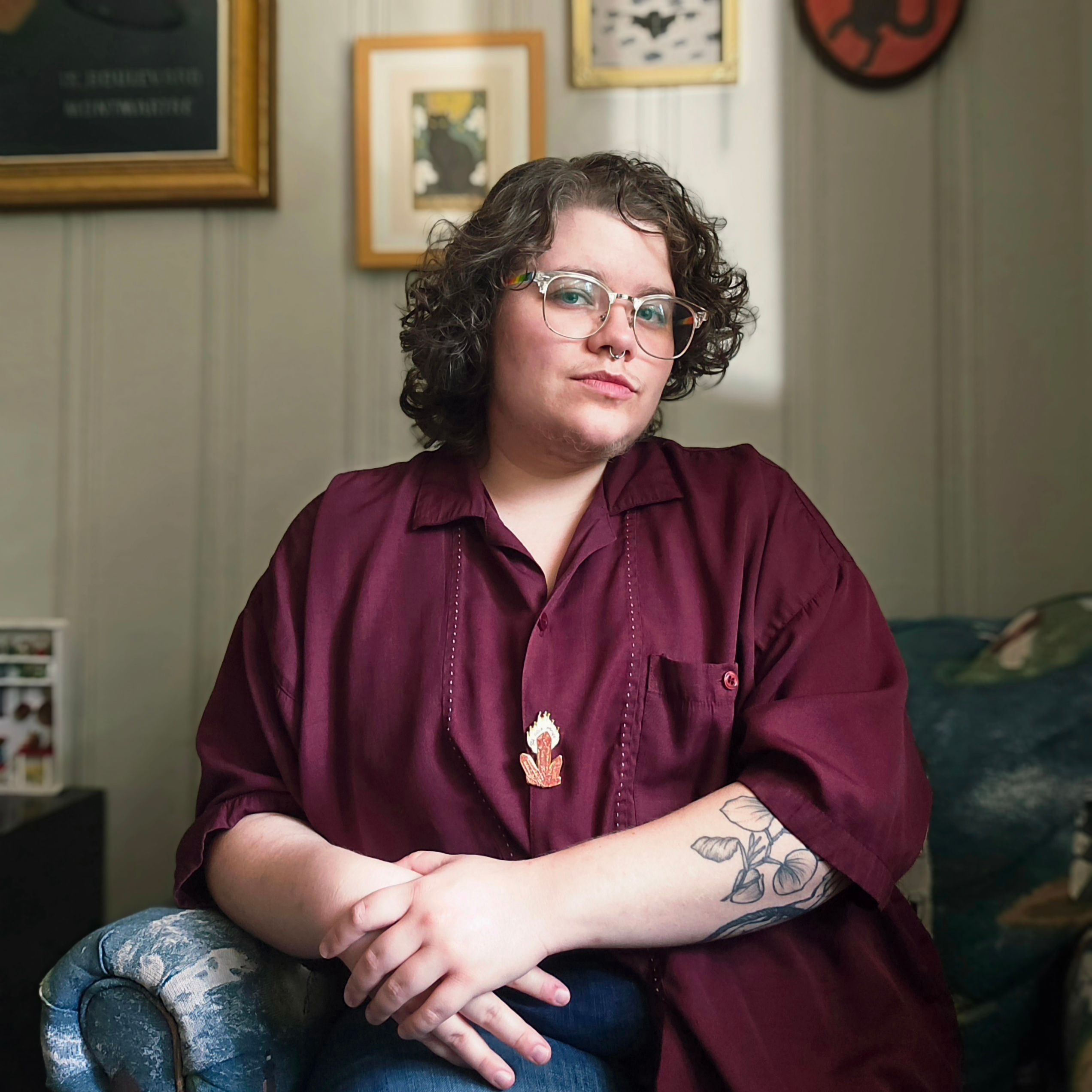
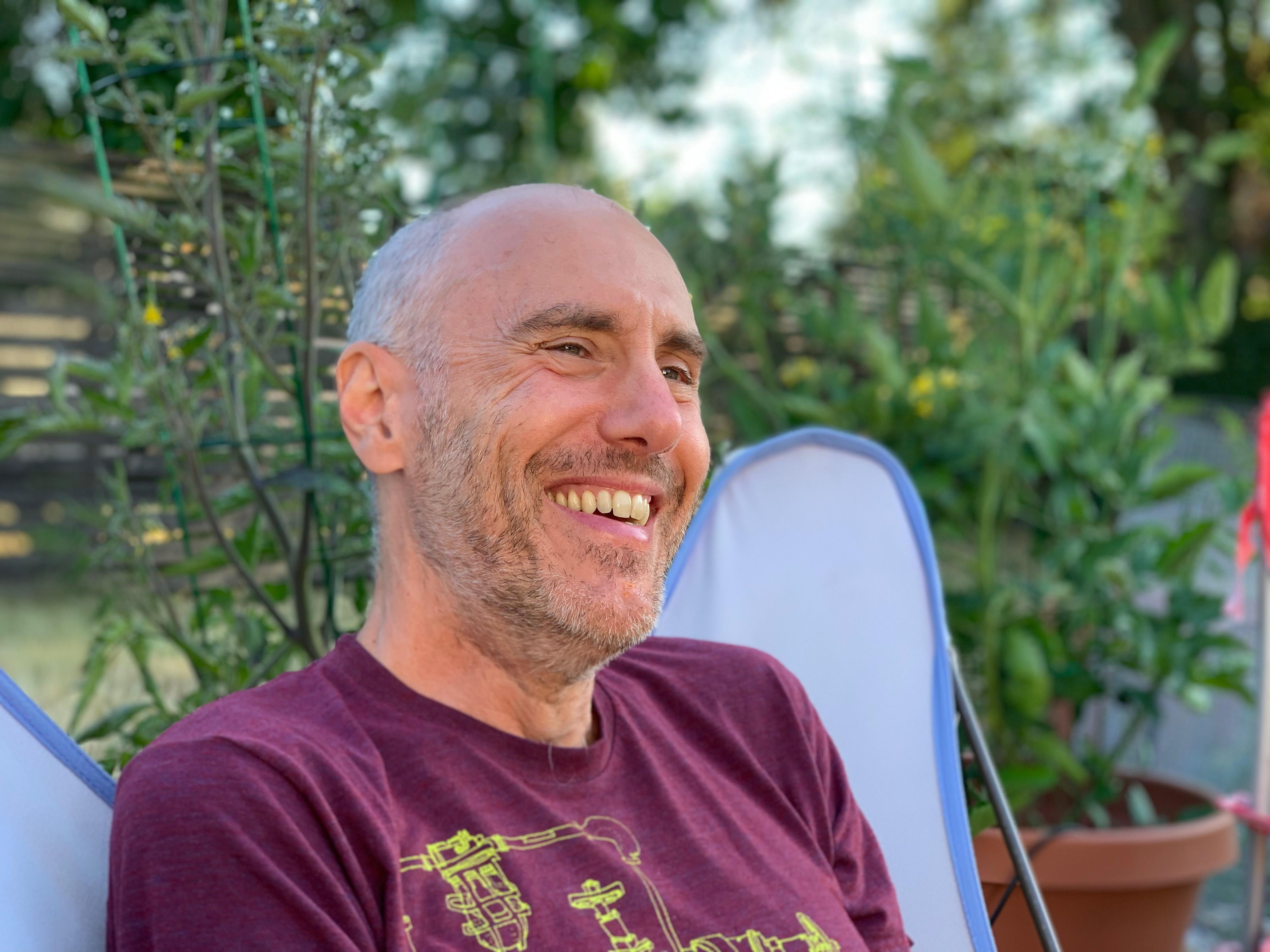
Tadeo: Let’s start with The Jackal. When I proposed the idea of focusing on surprise developments in characters you added her to the list. I had intentionally kept her off of my list because I saw her as one of the characters who evolved least during the trilogy. In fact, her stability in the story seems to be a center point that emphasizes the swirl of the other characters around her. In my reading, she provides a sort of moral keel that alternately grounds and enrages others. How was she a surprise for you as the author?
CL Clark: [The Jackal was a surprise because] she didn’t exist in the drafts 1-4 of the novel. It wasn’t until I was writing the fifth draft and throwing in every idea that had cropped up in the previous drafts, leaving no stone of possibility unturned, solidifying every shaky world, plot and character question (because I planned to abandon the story after this draft), that I put her in. In the earlier drafts, I knew that there was a weakness in Touraine’s only link to her past being a younger brother she had never met, a rival in the rebellion who was very antagonistic toward her. There was also a bit of a narrative hole, because I never had Touraine explore more of her family and ask that question, which was the elephant in the room, so to speak—who is my family? The easy answer was to have the mom be dead, off the page, maybe the source of a missing-tooth wound for Touraine, but never more than that. It was much more interesting to take that antagonistic brother figure and put in a woman who has a much greater, more personal reason to be disgusted with her. I kept the physicality of the brother for Jaghotai [the Jackal’s given name], and ended up with a mother who was so unlike most mothers in fiction (especially SFF) that I knew she was perfect. Her existence was the click of the story falling into place. I don’t think it was a coincidence that it was the draft with the Jackal that got agented and sold. However, you are right in that other way—Jak is set in her ways. She knows who she is, she understands her values. And while I do think she surprises herself with some of her own choices in The Sovereign, she is steady and isn’t desperately searching for an equilibrium. I love that about her.
Tadeo: For Pruett and Touraine, I would like to know the degree to which you were surprised by how they developed.
CL Clark: I cannot say that I am fully surprised by how any of my characters developed, only because I think, after I’ve told one story with them, after I’ve gotten a sense of who they are and what drives them, I understand the potential branches their story can take.
For example, from the first book, Pruett has always been opposed to the Balladairan Empire, but she was willing to go along to get along. When she feels like she has lost Touraine to Luca and Balladaire, and then later, to Qazal and the rebels, her anger at both parties intensifies from apathy to a bit of opportunism. Seizing control of Masridan, to me, was a moment where she was at a cross-roads, not so much because of a sudden ambition, but because she had a choice—keep being controlled by parties who had no love for her and hers, or take what was right in front of her, using her bloody skills on her own behalf. For me, it felt less like a surprise than an inevitability. Less a surprising behaviour on her part, and more—a surprise opportunity and I got to see what she did with it.
[As soon as I had] Pruett take the reins of Masridan, I knew how I was going to pressure the Balladairan Empire. Partly because of the historical references I pulled from, the general nature of politics, but partly because—it was a new, brilliant way to put some painful pressure on Touraine to see if she would keep making the same choice over and over again, or if she would finally, faced with the biggest rock against the hardest place, break and choose something else. But again, pitting Pruett against Luca? That wasn’t really a surprise. Luca and Balladaire had already hurt her. By the third book, Pruett is offered vengeance and she has the power to take it. She does not have the Jackal’s measured maturity. Not yet.
That vengeance is the same thing that drives her apart from Touraine at the end. She gave Touraine so many chances to prove that she loved her more than Luca, more than Balladaire. What she sees Touraine doing is unforgivable, no matter the traded blows between them. She knows Touraine made her choice, so she makes hers. To be honest, I’d say the most surprising thing is that she saves Touraine at the end. Which some might call a favor for a favor. Others might call a truce. Some may even call it forgiveness.
Tadeo: Clark veered into more general discussion of the role of surprise in her writing.
CL Clark: I suppose that’s the interesting part about this question, this idea of surprise. Do I believe in it? I’m not sure I’m a writer who believes my characters ‘escape’ me, though I do believe in building them up so thoroughly that their pasts, their desires, their fears will drive their choices—but I wouldn’t say that they surprise me, because when you know a person well, you can often guess their trajectories. And when they do something that surprises you, well, there is probably something else motivating them, something that would also make sense, goading them. A deeper fear, a brighter desire.
The things that tend to surprise me, then, are actually the situations I come up to put them in. As the characters make their choices, and I have to logically figure out what comes next, sometimes the possible consequences aren’t things I’d thought of in the plotting process, or when I had that character make that decision. (I am, after all, still in charge of this process, and it is only my imagination at play here; sometimes it takes time to catch up—years, even.) Sometimes, I’m stumped at what could or should happen next, even with all of the character motivation in the world, or I’m stuck in a rut of only common options—injecting randomization from dice rolls or brainstorming decks or tarot can help, and those discoveries can also be surprising.
When I look back on a complete series, as I can do now with the Magic of the Lost, I do feel some surprise. There are characters I didn’t know would exist when I started it, or characters who rose to a prominence in the affections of other characters—and readers!—that I didn’t expect from those early drafts. There are endings I didn’t know how I would make happen, only that they would.
Tadeo: Touraine's evolution to accept Balladaire as a place where she belongs was one of the more surprising twists. I was also surprised by how she got over her imposter syndrome to accept her right to wield royal authority. Tell me about how you arrived at those decisions.
CL Clark: And so, going off of that statement, about endings—Touraine’s journey was probably the most surprising to me not because her behavior or character development was so surprising, but because she’s the one whose changes were the most philosophical. It was on her that the tug between homelands was most deeply felt, and so there were so many options for her narratively. I didn’t know, in The Unbroken, that I would end up putting her, however briefly, at the top of the Empire as a royal. She could have just as easily stayed in the newly independent Qazal as a member of the ruling council. It would have been a very different trilogy, and one that I am, admittedly, very curious about. And technically, she does go back in the end…maybe a sequel sequel…
I also knew that I wanted to see her in both nations—to see her interact in a variety of Balladairan contexts and grapple with that past when she was free, no longer a conscript slave. What choices would she make? How deeply had her time in the rebellion changed her? I was very interested in that. But at the beginning of writing the trilogy and all the way through it, I continued to ask myself what is the roll of minoritized diaspora citizens of empire—where do they belong? Where is their allegiance? How do they square up the wounds that brought them there with the fact that they have no claim on an ancestral land, either? What would it mean to love someone who was a part of that trauma? And because those were my preoccupations, that was also less surprising to me.
And because Touraine was a principle protagonist, her character arc was always going to be front and center—from the beginning, she was very low hierarchy of power but she had some ambition. One natural end of that arc is to give a person like that power, and to see what they do with it. Early on, I suspected I would make her a general. Mirroring her obsession with the Blood General. I just didn’t yet know how it would all come about. Or what side she would be fighting for.
Another thought that this vein of questioning opens for me, is a craft tip I read somewhere saying that readers should find the story “surprising but inevitable.” I don’t remember if this was said about plot or character, but it does make me think about how one makes a character surprising for a reader without breaking a certain contract of internal logic. Perhaps it goes back to my earlier thought about surprising choices coming from deeper needs, maybe as yet unrevealed by the narrative.
Tadeo: With Luca, I admired your commitment to her personal ambition. It raised all the right moral dilemmas and added great tension throughout the story. She sacrifices so much by way of ideals and love to her ambition that is emotionally credible when she gives up the throne. Where, if anywhere, in the story were you tempted to have her cede some aspect of the ambition in favor of her ideals? What were the temptations of not having her step down?
CL Clark: I was often tempted to soften her, actually. To make her a better person, to make her more palatable for readers, especially since she was supposed to be a love interest. In fact, in The Unbroken, I did soften her from earlier drafts; she was much more someone used to taking what she wanted, as she wanted it and consent was not a priority. I changed that for the above reasons. It would have been too big a leap for her to make, I think, in the span of these three books. So I made her an idealist, instead, who hadn’t fully given up her need for control, who hadn’t quite realized that her need for control was directly opposed to those ideals.
I was also tempted, for a time, at least, for her to go down with the ship. For her to descend into full villainy, for Touraine and Pruett to unite against her. For Touraine to go down with her was another option. But I think, by that point, since I was still interested in examining some of the tropes of the genre, including bodyguard/royal pairings and the ubiquity of monarchy in fantasy, I wanted to see for myself what else could happen. How can these tropes be different? What would have to happen for them to be together with a chance at happiness? And so I spent a lot of time breaking her down to the point where I thought Luca would make that choice. To make both surrender and stubbornness both reasonable options for her, even if one option is a bit more of a surprise for the reader. But again, if we go back to character arcs, Luca has few natural options for her journey, too—she starts high (higher than Touraine, anyway, higher than all but a few), and eventually begins to fall. The question is just—will it be a graceful one, or is she going down in flames?
Tadeo: It is an implicit commitment in the fantasy genre that protagonists who quest for magic will find it. The path is usually unexpected or the price may be high but magic is granted. Luca never finds the magic. How committed were you to that outcome?
CL Clark: I knew when I first started understanding Luca’s character that I didn’t want her to get or keep most of what she was grasping after. I think there was a short period of time where I thought maybe in the second and third book, The Faithless and The Sovereign, that she might get some facility with Balladaire’s magic, but in the end, I thought it was really useful to show that feeling entitled to something does not mean you are entitled to it. Neither does wanting something really really bad. More narratively, though, denial of a desire means the character has to pivot. They have to try greater and greater things to get what they want, or they have to come at it from a different angle or make alliances they would otherwise never consider. It means compromises. And from a narrative standpoint, that was gold. It kept the story unspooling.