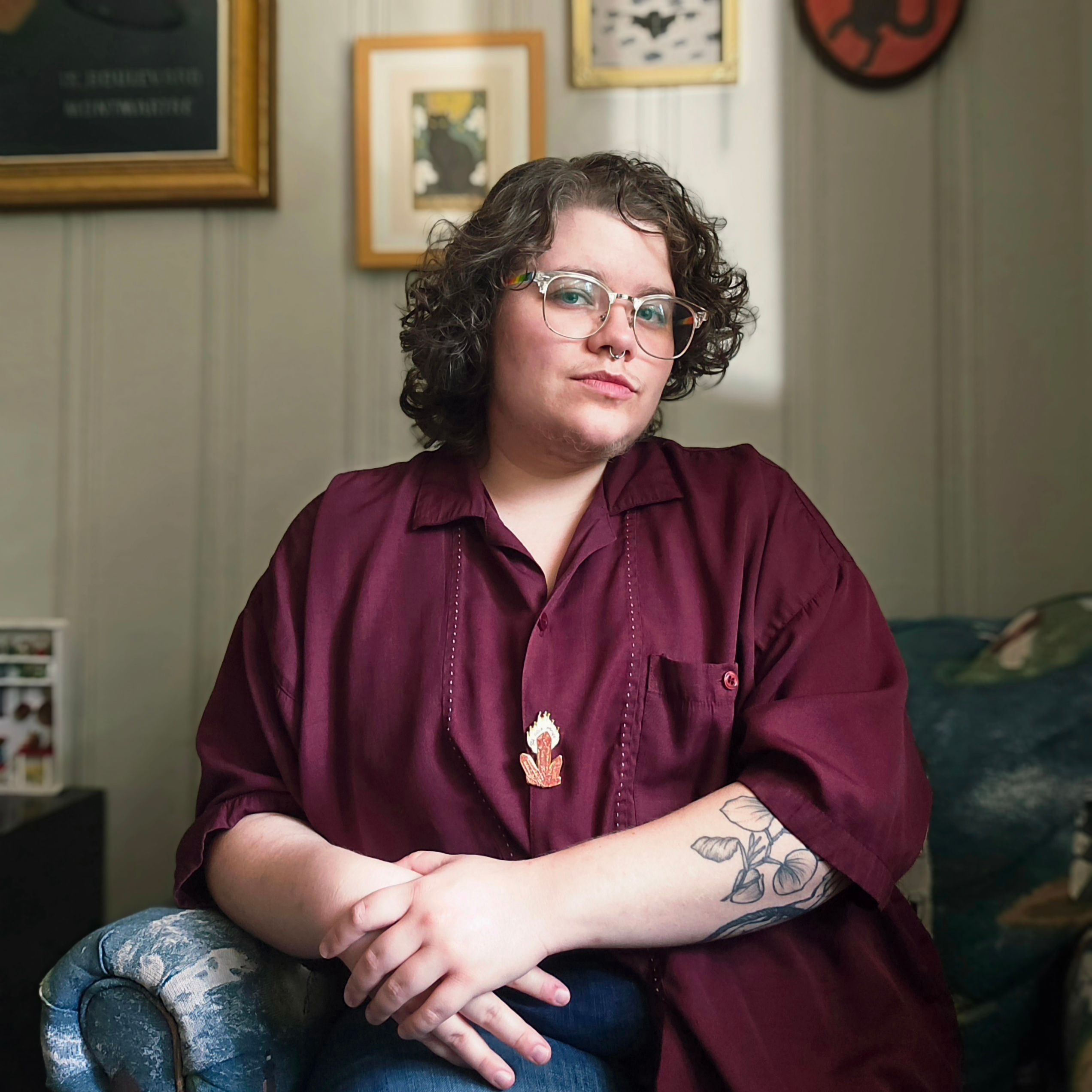
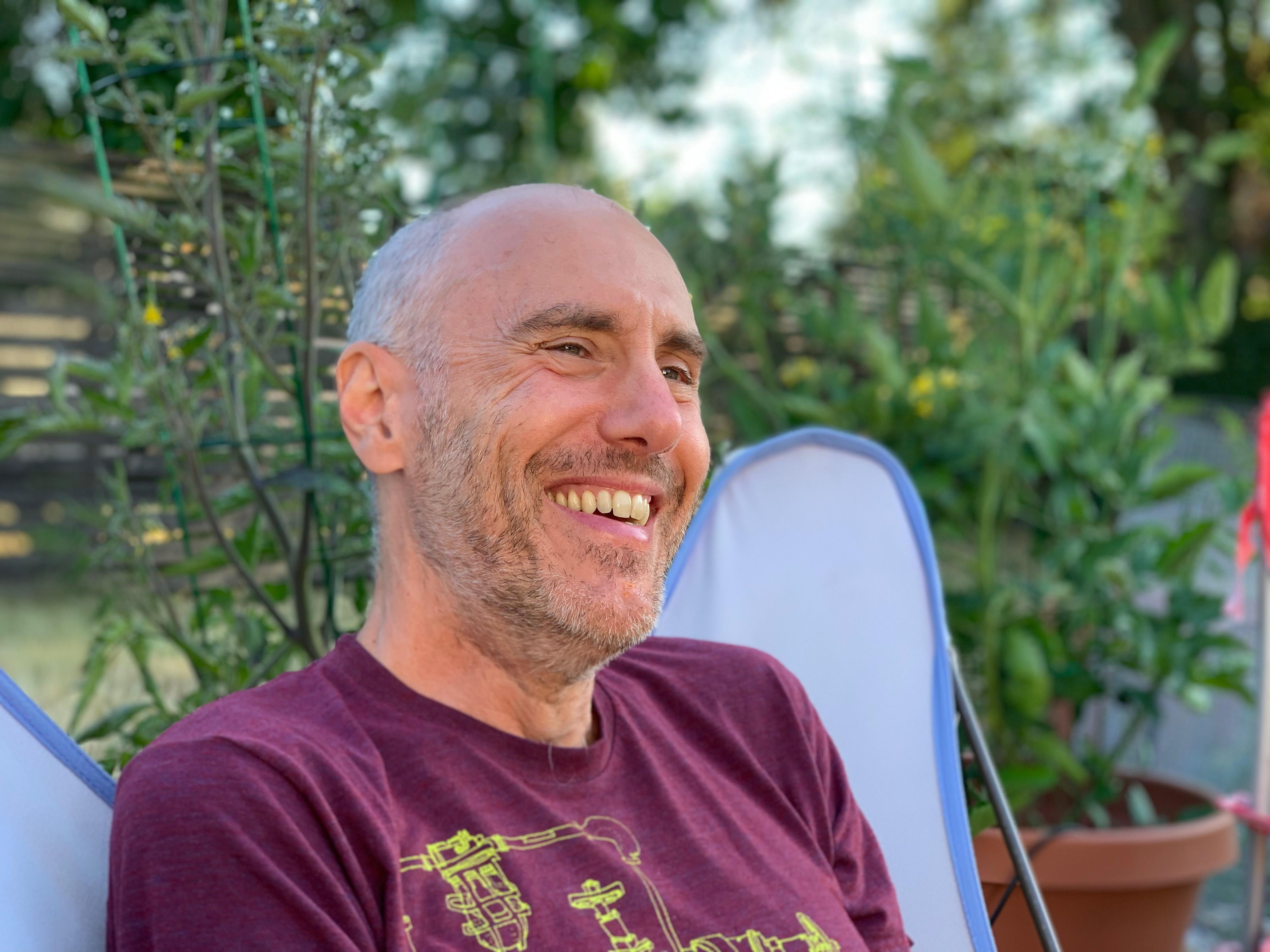
Jayda Skidmore: For those who haven't read this book's chapbook predecessor, can you give a quick overview of what happened in that book and how it informs this one?
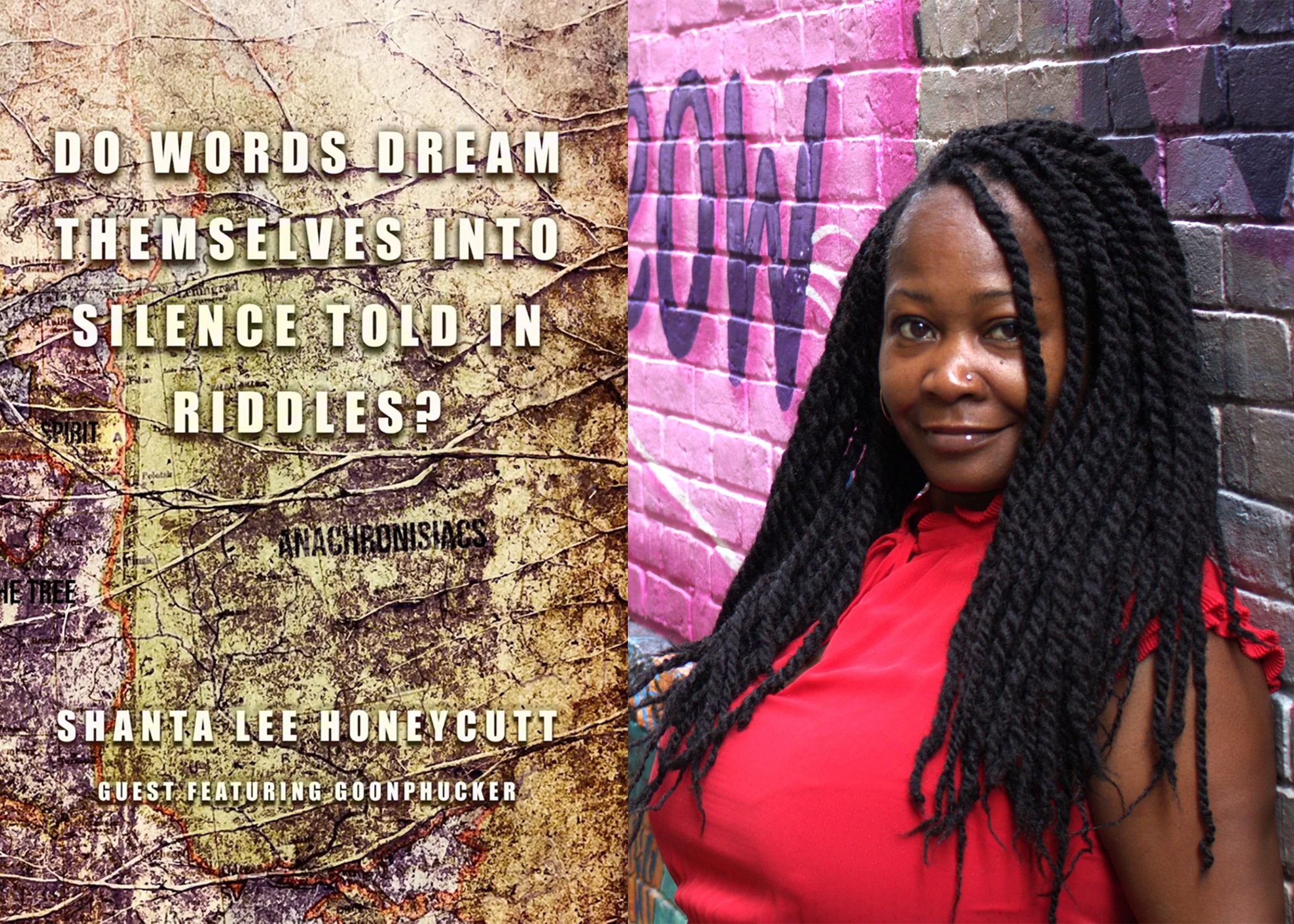
Shanta Lee Honeycutt: This Is How They Teach You How to Want It... The Slaughter: A Field Guide for the Hunted & the Hunter, The Dead-Alive, The Live-Dead Ones, The... is a chapbook and precursor to this work, Do Words Dream Themselves into Silence Told in Riddles? That chapbook originally started as a long poem, and it morphed into something else (funny how our work will do that).
I was interested in tapping into the ancient mythology of what is known as Wilde Jagd, or the wild hunt. Within the original form of this ancient myth, Wilde Jagd, are wraiths who sometimes pursue a target. I started thinking about the human relationship to being pursued or hunted (with each other and across other parts of the animal kingdom). I also was wondering: What is the most brutal and bloodiest form of slaughter? Is it the kind of slaughter that leaves no sign of what has happened? Bloodless?
And while the full collection, Do Words Dream Themselves Into Silence Told in Riddles? goes into the territory of balancing between real, and unreal, there are elements of psychological unrest and a trickster named Goonphucker. Maybe in some ways, the trickster is a hunter? I have not thought of it in that way previously. And perhaps, in the way that we try to discern between what is and is not real – especially in the age of AI – there is some kind of psycho-spiritual-emotional chase. But this chase, or what one might catch, isn’t quite tangible.
JS: Do Words Dream Themselves into Silence Told in Riddles? is a hybrid poetry and prose collection. What inspired you to write in hybrid form and did you face any challenges because of it?
SLH: I have always been drawn to writing or arting in ways that employ hybridity and blur the lines. In terms of blending poetry with other genres, why shouldn't we apply the rules of meter, rhythm, and form to the creation of prose or even journalism?
On a deeper level, the blurring and blending makes natural sense. There have been a range of examples, historically, that have involved a syncretic kind of thinking and engagement. We have seen and experienced this when we listen to music and hear the bones of other genres coming together. Various spiritual or religious practices combine cultures in a certain way. In short, to create work that is hybrid – or what one would describe as syncretic if we were looking at a blend of cultures or practices – is human. It is inevitable and perhaps should not have a special title.
In terms of facing challenges, I think there are always situations in which individuals may not quite understand how to label or define. So many of us have been trained into the “one thing.” And to be fair, from a business sense, they need to know what shelf to put the books on, right? This is for distribution and marketing purposes. And I’ve encountered individuals who have told me that no one publishes hybrid, or that I would have a hard time finding a publisher for my hybrid works.
I am inspired by that kind of narrow thinking because it encourages me to continue walking to my own rhythm and also question the places where I too might be applying a very narrow logic or constraint to the creative practice.
JS: In a similar vein, what inspired you to write another book based on these characters?
SLH: The book does not really contain characters. Or, similar to how I answered the first question: there was some expansion upon an idea, but the book really goes in its own direction. Does that make sense? However, there is a trickster entity who shows up as a concierge, of sorts. In some ways Goonphucker is a character, or some of the kinds of characters within specific pieces.
One could say it is a variation on a theme, but I’ve really gone into different territory, especially because of the numerous ways it is fed by film, art movements, and other concepts.
JS: You mentioned that some people have said that no one publishes hybrid writing, or that you would have a hard time getting it published. Considering some people think that way, what was the publishing journey like for your hybrid works?
SLH: Both my publishing and creative journey required a practice of shutting out the naysayers. There is a rather famous story I want to share about why this is important for and to the work. André 3000 was told that the hit song, “Hey Ya!” would end his career. Of course, we know what happened. He followed the beat to his own drum and put out a song that blew up. It is not the success of the song that is the key to the story, although that is the shiniest part that most would be drawn to. It is the piece about putting out the work or listening to the thing that said, “Do it. Don’t listen to them.”
For all of my work, I listened to the nagging voice that said, “Keep going.” For example, when I once told someone I was going to write my own version of Ovid’s Metamorphoses, their body language and gasp said, “You are out of your gourd,” but what they said was something along the lines of, “That is audacious.” My will and defiance responded with, “Watch me.” That was how Black Metamorphoses (Etruscan Press) was born.
I have been fortunate that my hybrid works have found very warm, cozy, and welcoming homes with publishers who were more interested in taking chances than following a norm. Sure, along the way (not with my hybrid work, but with other pieces) people did not necessarily “get” what I was doing. And in those situations, you don’t want to be sitting at a table where someone doesn’t quite understand or get it. In other situations, even if a publisher did not take the work, they were intrigued enough to have the conversation. For me, that is always a win.
I wish more parts of the creative world operated in that way in terms of making time to have conversations about work that intrigues, even if it can’t be taken or accepted. When I approached Harbor Editions to publish Do Words Dream Themselves into Silence Told in Riddles? (also known as Small Harbor Publishing, the publisher who published the chapbook), I was of course nervous. I love how they took a chance and said yes to the work.
JS: Do you have any hopes for this collection and the ways in which it may impact readers?
SLH: My hope began with giving myself permission in terms of what a collection like this could or would look like, especially in terms of journeying into the surreal and uncanny. In many ways, I took this as an invitation to do different work. I only hope to continue expanding in that vein of creating different and thought-provoking work.
My expectation (perhaps a dangerous word) for how it would connect with readers is similar to what I wish for in all my work. Across photography, film, and all the genres I traverse (including journalism), I am interested in inviting the audience to engage with:
3. Deep curiosity to the point that they become voracious
4. Questions that they may be afraid to even ask themselves
So, no huge expectations at all (ha, ha!). On a less playful note, I am always surprised by how readers or an audience may be impacted by my work in ways that I never could have envisioned. Surprises like that are always nice.
JS: What advice would you give someone if they wanted to explore hybrid writing?
SLH: The advice that I would give to any writer or artist – this covers hybrid and also other mediums outside of writing – includes this short alphabet:
A) Know that no one owes you the space or time for the work. It will be up to you to be the shepherd for when, where, and how the work comes into being. This piece of advice is really coming from a place of observation that it is so easy for one’s artistic or literary life to be Instagramable in this 21st century.
Yes, while the fellowships or retreats are nice, having access to those things may not always be possible (heck, some may not even know about those things being available to them!). If you are co-running a household with your beloved, for example, being away for a month is unrealistic. If that isn’t available, your work isn’t going to wait for that soft life experience. Just know that your work may come barging in, demanding you at least commit to one sentence, or engage with feeding the idea (internally), even while other things are happening in life.
B) Take the haterisms as a sign that you are headed in the right direction (and please, shut out the naysayers). I am so serious. When I was a child, I would come home from school and complain that people were either talking about me, or they were making fun of me. My mother would say sternly, “Good, you are famous.”
While the vehicle could’ve been a bit softer, maybe even motherly, I think back on that message, especially as it has pertained to people telling me what will or will not work (or what won’t be accepted).
All to say, create the work you have been fantasizing about creating. Ignore what people will tell you about what is “wanted” or “desired.”
C) Work backwards from a 90-year-old version of yourself. I got this idea by reading something while I was in my twenties by a woman who was in her more, shall we say, vintage years. I am paraphrasing here, but she said that when you get older, you’re not going to wish you showed up to work more often or did things by the book. You are going to yearn for all the risks you should’ve taken.
So, work backwards from the deathbed.
I know it sounds morbid, but it is really my way of saying: make sure you live with audacity with your creative work and in other facets of your life, so that as you look backwards in your vintage years, you might possibly laugh at how audacious you were, as opposed to mourning the chances you never took.
This directly applies to the page and to any other medium. If you spend too much time being risk averse, how will you make discoveries about your range within the literary realm, or other areas of art or creation?
D) Make your list of impossible things. Be like Alice in Wonder(land) as you engage in play. More properly, I borrow all the time from a quote within Alice's Adventures in Wonderland, which ties back to my advice here. The quote is:
Alice laughed. “There's no use trying,” she said. “One can't believe impossible things.”
“I daresay you haven't had much practice,” said the Queen. “When I was your age, I always did it for half-an-hour a day. Why, sometimes I've believed as many as six impossible things before breakfast.”
Back in 2014, I started a list of what I call “impossible things” (it also goes by other names, depending on my mood). The whole idea behind it came from writing down quotes, imaginary games based on real life situations, and all sorts of things that came peeping into my everyday life. These are based in reality, but the most ridiculous and absurd things ever. I have been adding to that list for well over a decade.
The best way I can describe what is on my list is that it is like The Onion on an acid trip that results in endless laughter. It is my way of keeping play alive for myself while also trying not to take things too seriously (and there are things I do indeed take very seriously).
Start that list. You may be surprised that some of these things might possibly turn into great material that you can use for something.
E) There are no cool kids. The cool factor comes from your writing business minding itself, not what others are doing. It is easy to see or hear what others are doing – like getting published or who is doing what and where – and get sad or feel like asking the question, “When is it my turn?” However, if you spend your time stuck in neutral seeing what Johnnie, Bobbie, and Barbs are doing, then you won’t get out of your own way.
There is a balance to everything I am saying (for example, you SHOULD keep a finger on the pulse of things but don’t get lost in it). It comes down to you finding your own balance by designing the rules that work for you.
And most importantly, as my very good friend Suzanne Kingsbury, author and founder of Gateless Writing, says (and I hope she forgives me for paraphrasing): the work will guide you to where you need to be. She is right and I have gotten in trouble straying from that wisdom.
JS: What was the most difficult part of writing this book? Conversely, what was your favorite part of writing this book?
SLH: The most challenging thing with this fifth collection was making it different. I wanted this work to have its own personality apart from my other works. Sure, there are themes that you could say re-appear across my work, but I wanted to go into a different territory that felt uncharted and scary at times.
The hard part about pieces of the book is having people sometimes engage with a piece thinking that it is poetry when it is a short story. Or when audiences have taken the short stories as fiction. I equally find these misunderstandings delightful because the book has proven to be a real shapeshifter, which is apt for a book that centers around a trickster figure who appears and vanishes between the pages.
And, the uncharted territory within the book that felt like it bent to – or tried to court – horror. As a horror geek, that was my favorite part. There were many times that going into this space was also vulnerable, and I kept saying to myself, “This is crazy.” Going into those crazy parts internally and on the page felt freeing in many ways.
JS: And finally, something I love to ask every author: if you could tell anything to the younger version of you who just started writing, what would it be?
SLH: If I had to talk to a 12-year-old me who started by writing in her journal, who at some point (years later) encountered Def Poetry, I already know that she told herself: “No. You don’t have that voice, so, your poetry? Keep it a private, quiet utterance. Your prose and storytelling? Keep it to just your notebook.”
I would tell her: You don’t see it now, but I love you and I got you. You have so much to say in such ways that might surprise you while sending along a light (or fire) of encouragement to others in the ways you don’t engage with right now. Go on and take as long as you need, girl, with making your private utterances, your words, public. And most importantly, let this call – the call to create on and off the page – be the thing to lure and seduce you into doing.
And if you listen and follow it, you will be so fed. You will be so full.
I can’t tell you all that awaits. You know how these things work. But trust me on this one. Hang in there because it is bumpy now and there are ditches ahead, but oh, the road at times? You will appreciate the smooth parts. The parts that lead to random places. If you get lost along the way, listen to my voice. I will guide you.